Black Art Card Preparation: Fabric, Tape, and Finishes
This lesson by Peio Rivas covers the preparation of cards for Black Art and the criteria he uses to choose his materials. The work starts with a standard deck of cards and goes through the edges, borders, and covering, before comparing the applications of fabric and black tape within a manipulation sequence.
Preparing the Card and Refining its Finishes
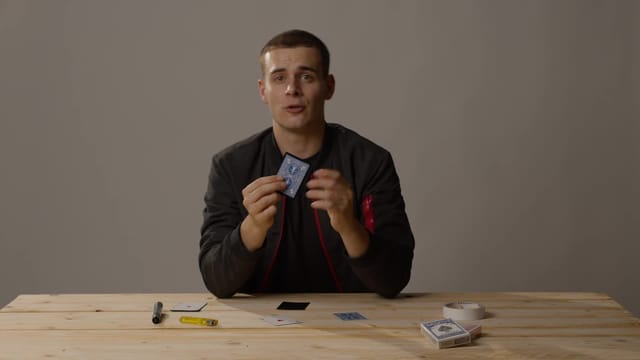
Peio demonstrates the treatment of edges, corners, and borders using a permanent black marker. He explains why he pays attention to those parts of the card before adding the covering and uses standard deck cards as an example. He mentions various possible models; the preparation does not rely on an exclusive brand.
The section dedicated to fabric covers attaching it with double-sided tape, trimming the excess, and finishing the edges. He also shows the finishing touch he does with a lighter to remove stray threads. The explanation allows you to recognize the construction phases and the details that could leave an edge or a poorly executed finish visible.
Choosing Fabric Based on Wardrobe
For direct uses, where the prepared surface is exposed to the audience, Peio strongly recommends a fabric similar to his manipulation suit. He explains that it is not enough to just pick any black: he looks for a match in weave and tone with the garment he will be wearing.
He includes practical guidance for sourcing this material: taking the suit to a fabric store and looking for a compatible textile. It is a choice tied to the wardrobe and the conditions of the routine, not a requirement to buy a magic prop from a specific brand.
When to Use Black Tape
The comparison with electrical tape focuses on its properties and the position of the prepared card. Peio discusses its lighter weight compared to fabric covering, the gloss that can give it away if shown directly, and the grip it provides for sleights where you do not want it to slide.
From there, he explains his preference for tape in indirect uses, such as covering a packet during a production sequence. He cites Perfect Production and Japanese production to illustrate the function of that card; this lesson explains the preparation and his criteria for use, without teaching those production techniques from start to finish.
Materials and Scope of the Lesson
You will need standard cards, a permanent black marker, black fabric compatible with your wardrobe, double-sided tape, black or electrical tape, and scissors. The fabric finish demonstrated also uses a lighter. The choice between the two coverings depends on the application you are studying; it is not presented as a mandatory purchase of a specific magic product.
This lesson is aimed at anyone who wants to build their own Black Art props and understand why a finish suitable for one use may be less practical for another. It includes physical preparation and a comparison of their applications. Peio Rivas teaches and demonstrates this work; the references to manipulation sequences serve to place the materials in context.