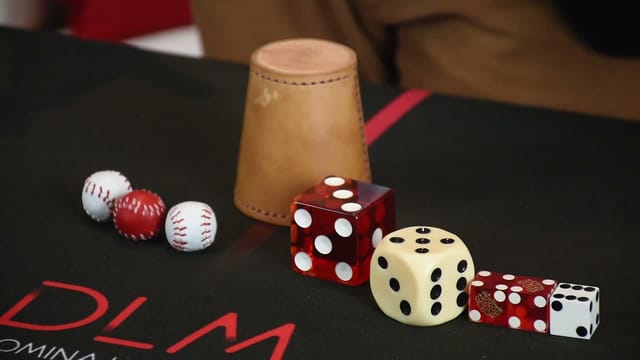
Dice Chop Cup: Color Changes and Travels
Ricardo Sánchez presents a Chop Cup routine where a lucky die contrasts with another of a different color. The dice change, travel between the hands and the cup, and lead to two larger productions. The masterclass combines performance, the study of sleights, and a complete walkthrough using a transparent glass to make the handling easy to follow.
Sleights and Phase Construction
The explanation covers the Bobo Switch, the L’Homme Masqué Load, and the Spellbound change, applied to small objects. It also tackles the false transfer, the drop steal, and how to coordinate these resources with the mechanics of the Chop Cup. The focus is on linking actions seamlessly so that the changes and travels maintain continuity.
The instructor walks through his sequence from introducing the die to the final loads. He analyzes hand naturalness, relaxation after each sleight, angle control, and timing priority to guide the audience's gaze. During a trickier moment, he offers an alternative that avoids a toss, allowing you to choose the handling you master best.
The final loads receive a specific breakdown regarding body posture, coverage, and rhythm. Afterward, the entire routine is performed from start to finish with the demonstration props, discussing the details of each phase.
Clarity and Presentation
The lucky die provides a motivation for the actions, setting this version apart from the traditional shell game. You will study how to maintain an engaging rapport with the audience and give value to every effect without rushing to the finish line.
References to Don Alan, Larry Jennings, Paul Daniels, Pipo Villanueva, and Gabi Pareras help expand your structuring ideas. Possible object substitutions and scripting options are also discussed to help personalize the routine.
Props and Requirements
To follow along with the featured version, you will need a Chop Cup, two red dice suitable for handling, a white die of a similar size, and two large dice for the final productions. You can substitute the small dice with the two Chop Cup balls and a third contrasting object; the explanation points out which parts need adapting.
The setup requires a table or small close-up table and appropriate pocketed clothing, including a jacket and trousers for the taught setup. You should have a solid grasp of the false transfer, finger palm, and classic palm. This is a demanding routine, designed for a stand-up parlor performance. Different cups are compared, and DIY options are shown so you can practice with simple materials.