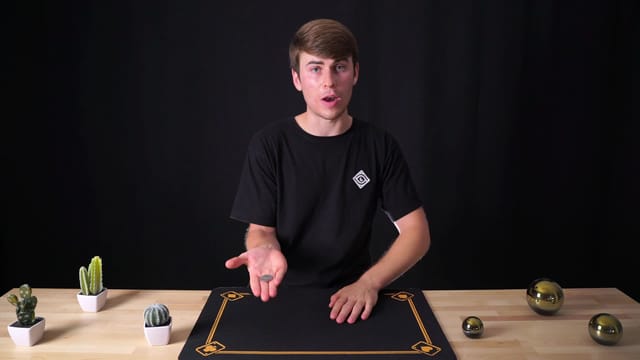
Coin false deposit: two handlings and misdirection
Simulating a transfer within a routine
The false deposit creates the illusion that a coin has passed from one hand to the other. Julio Ribera explains two ways to structure this movement and leave the hands in a useful position to continue.
The lesson focuses on a single sleight. The instructor insists on integrating it into a structured routine: performing an isolated vanish can immediately draw suspicion toward the other hand.
Coordination and the receiving hand
The explanation covers changing the orientation of the palms, the tossing gesture, and the closing of the hand that supposedly receives the coin.
It also covers how to separate and elevate that hand, following it with your gaze. The other hand must be able to retract and relax in a way that is consistent with the action the audience believes they have seen.
Two ways to hold
One version uses the thumb during the transfer and ends in a finger palm. The alternative starts directly from that position and uses a different grip when making the gesture.
Julio compares both handlings so you can choose the one that best fits your practice. The common goal is to maintain the appearance of a transfer and seamlessly connect it to the effect you are performing.
Materials and useful knowledge
You will need an ordinary coin and familiarity with the finger palm position. The tutorial shows its use within the movement, without developing a full routine or a detailed course on all palms.
Practice the genuine pass, hand coordination, and relaxation before using it as a vanish within your patter.