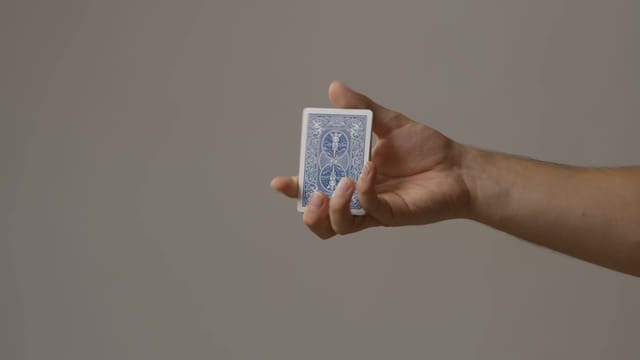
Front Hand Split
What It Looks Like
The Front Hand Split is a quick, visual move that lets you produce an object—like a coin or small item—right between your fingers from an empty hand. It looks like you're plucking the object out of thin air. You can also use it to make an object disappear just as fast, leaving your hand looking completely empty.
Why It Works
This move relies on clever finger positioning and natural movement. By using the back of your hand to hide the item and your fingers to create a frame, you direct the audience's eyes exactly where you want them. It’s effective because it doesn't require bulky props or awkward grips.
What You'll Learn
You'll learn how to position your fingers to hold an object securely while keeping the front of your hand visible to the audience. Peio Rivas breaks down the specific tension needed in your fingers to make the move look effortless rather than strained. You’ll practice the transition from a hidden position to the display, ensuring the object appears instantly.
About the Instructor
Peio Rivas is an award-winning performer known for his visual, fast-paced manipulation acts. He specializes in creating magic that feels modern and surprising, focusing on clean technique that works for both close-up settings and stage performances.
What's Included
- Finger positioning for the split
- Techniques for clean production
- Methods for vanishing small objects
- Tips for keeping your hand movements natural
Frequently Asked Questions
What angles work for this?
The move is best performed with the audience directly in front of you. Because you use your fingers to frame the object, avoid showing the back of your hand.
Can I do this surrounded?
It’s not recommended for 360-degree environments. This move is designed for front-facing performances.
What props do I need?
You can practice this with any small, flat object like a coin or a poker chip.
How much practice does this take?
It’s an intermediate move. You’ll need to spend time getting your fingers comfortable with the tension, but once you have the muscle memory, it’s a very reliable piece of technique.