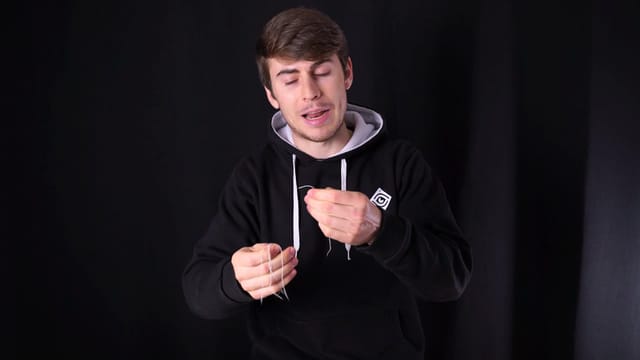
Gypsy Thread Restoration
What Most People Get Wrong
Many magicians struggle with the Gypsy Thread because they use the wrong materials. They try to work with synthetic threads that are too tough to break smoothly, or they focus so much on the "secret" that they forget to make the restoration look natural. If your hands look tense while you're supposedly holding a single piece of thread, the audience will know something is hidden there before you even start.
Why It Matters
When you use the right material—specifically cotton thread—the breaking process becomes effortless and quiet. By mastering the handling of the extra thread, you turn a simple piece of string into a moment of genuine wonder. You aren't just showing a trick; you’re showing that you can take something broken and make it whole again.
What You'll Learn
This lesson breaks down the entire routine, from selecting the right spool to the final, clean ditch. You will learn the specific "figure-8" winding technique used to prep the thread, how to hide the duplicate length in plain sight, and the exact physical pressure needed to keep your hands looking empty throughout the performance.
The approach focuses on keeping the "reset" invisible. You'll see how to hold the thread so the audience sees nothing but a clean, unbroken line, making the final snap of the fingers look like a true restoration.
About the Instructor
Julio Ribera is a Spanish magician known for his practical, no-nonsense approach to close-up magic. He believes in universalizing wonder by teaching moves that anyone can practice and perform, focusing on clear mechanics that let the magic speak for itself.
What's Included
- Selecting Materials: Why cotton thread is the only choice for smooth breaks.
- The Prep: Step-by-step guide to the "figure-8" winding method.
- Handling & Angles: How to keep your hands looking empty while concealing the extra thread.
- The Restoration: Timing your pull to create the visual "snap" of the restored thread.
- Cleanup: How to dispose of the extra gimmick naturally so you can hand the thread to the spectator.
Frequently Asked Questions
What if I've been doing it wrong for years?
If you've been using synthetic thread, switching to cotton will feel like a relief. It breaks consistently and allows you to focus on your presentation rather than struggling with the material.
Is this the only way to do it?
There are many variations of this classic, but this method is designed to be as clean as possible for close-up settings. It prioritizes simplicity and natural hand movements.
How do I know when I'm doing it right?
When you can perform the entire sequence while talking naturally to a friend, and they don't spot any extra bulk in your fingers, you've got it. The goal is for your hands to look as relaxed at the end as they do at the start.