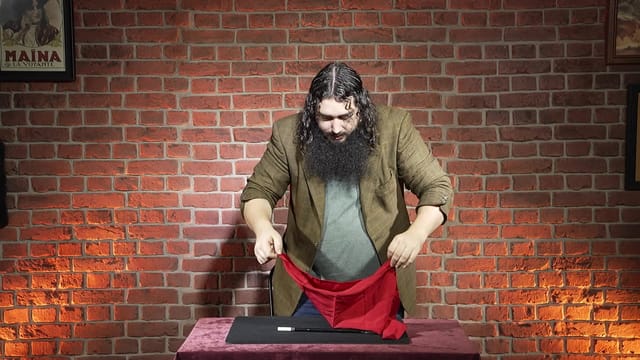
Hanky Panky: Sponges and Hanky
Three sequences with a hanky
The balls appear under the cover of a hanky, vanish one by one, and gather back inside. Afterward, they seem to pass right through the cloth while a spectator holds the corners. Xulio Merino demonstrates and explains his version of Hanky Panky, linking these ideas into a routine with a clear beginning and end.
The lesson contains a performance and an explanation covering the setup, the actions of both hands, and how to practice the routine as a whole.
Productions under the hanky
The beginning allows you to show the hanky and produce three balls in succession. You will study the relationship between the palms in both hands, holding the corners, and the timing of each production.
Xulio explains how to set the balls on the table and prepare the position from which the routine continues.
Vanishes and return to the inside
The balls are placed in the center of the hanky and its corners are gathered. The spectator holds them while the magician extracts each ball, vanishes it, and finally opens the hanky to show that all three are back inside.
The explanation works on the entries and exits of the hands, the false transfers, and the use of actions performed without sleight of hand to bring clarity to the sequence. The slow opening of the hanky is part of the revelation.
The balls pass through the cloth
The final block changes the effect: the balls progressively pass through the hanky. The spectator can feel them before each apparent extraction.
Xulio breaks down the arrangement of the corners, accessing the interior, the displays, and the Shuttle Passes that link the phases. The explanation distinguishes covered moments from exposed views used for teaching, and concludes with gathering the props and the empty hanky.
Props and practice
You will need four sponge balls, a hanky, and a wand or another means of cover for the vanishes. The routine uses a working surface and the help of a spectator to hold the corners.
To practice alone, Xulio suggests using a clamp and a stand or cord to serve that function. He also discusses the adjustments that setup requires during the explanation. It helps to be familiar with finger palm, false transfers, Shuttle Pass, and displays so you can devote your practice time to the flow of the sequence.