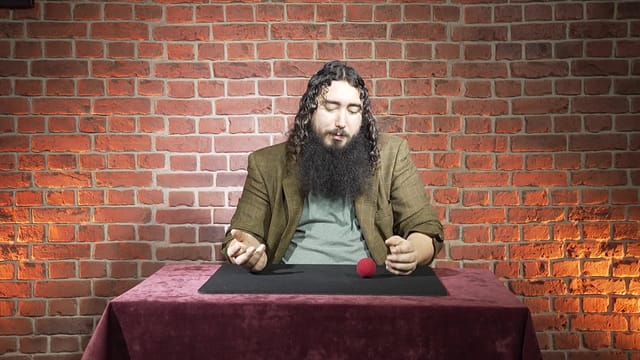
Sponges: Structure, Pockets, and Loads
Preparing the material to focus on the spectator
Xulio Merino approaches sponge magic from a structural perspective: how to organize your actions to give impact to what happens in the spectator's hands. This lesson brings together an introduction to that approach, two videos on pocket management and loads, and a brief setup demonstration.
The goal is for your props to be available right when you need them, and for pocket entries and exits to blend seamlessly into your patter. The explanation connects the physical preparation of the balls with the audience's attention and your overall body movement.
Structure and spectator spotlight
The introduction suggests studying routines based on the moments you want to highlight. Xulio focuses his approach on productions, assemblies, multiplications, or transformations that can be experienced right in the participant's hands. It is a guide for thinking through the sequence and the relationship between its phases.
Pocket organization
You will learn how to take advantage of the shape and tension of the fabric to keep your props precisely located. The explanation compares layouts that allow you to access one ball or several, and explores how to designate different areas of a pocket for loads, ditches, and props of varying sizes.
Xulio demonstrates examples with regular sponge balls, sets of small pieces, and a jumbo ball. He also explains how to set up your props when taking items out of or putting them into your case or a bag. His approach aims to use your pockets efficiently and adapt them to the needs of each sequence.
Loading with a justified action
The work continues with actions that allow you to bring in or remove a ball while using a change purse, a magic wand, a handkerchief, or another prop. These are examples of motivation that you can adapt to your own repertoire.
For loads that must go unnoticed, the explanation pays close attention to the opening of the spectator's hand, relaxation, and body movement. You will study hand positions, pacing, shoulder relaxation, and shifts in attention as parts of a single cohesive action. The emphasis is on finding your own natural gestures and practicing them consistently.
Props and practice
You will need sponge balls and clothing with pockets that allow you to replicate the explained organization. The examples with jumbo balls or small sets serve to study other loading requirements. The instructor usually works straight from his regular pockets, without any special magic pull or loader.
The final demonstration lets you observe a stacked setup and the successive retrieval of balls. You can use it as a reference to practice accessing your material before integrating the loads into your performance.