Introduction to sponge balls and material selection
Getting to know the material before practicing
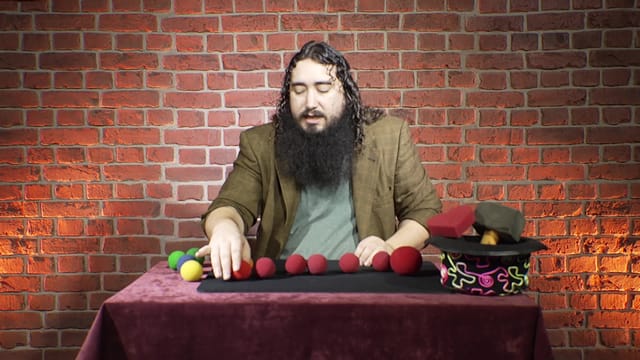
Xulio Merino introduces sponge balls as a working prop and explains the criteria he uses to select the ones he employs. The lesson brings together an introduction to learning this specialty and a practical comparison of sizes, shapes, and qualities.
The starting point is a set of balls of the same color. Xulio recommends gathering five to work on the two beginner routines he announces: one uses two and the other five. He also discusses an optional final production for anyone who has ten.
Size and visibility
The explanation compares balls of different sizes and suggests starting with those measuring about two inches, approximately five centimeters. The criteria relate the visibility of the uncompressed object to the volume it occupies when squeezed.
You will see why Xulio prefers to make the most of the visual impact of an expanded ball and how he weighs that factor alongside the comfort of concealment. It is a material recommendation for his beginner approach.
Texture, expansion, and moisture
The lesson distinguishes the behavior of standard balls versus Supersoft ones. He discusses the speed at which they regain their shape and shows how the material he is using responds when dampened.
These comparisons help you observe the properties of the balls you own, keeping in mind that their responsiveness depends on their quality and characteristics.
Preparing for the start
You can get sponge balls at a magic shop. To follow the beginner proposal, prepare five of the same color; one is enough to start studying the initial grips and exercises.
The special shapes that appear in the presentation illustrate the variety of the material. Initial work is organized with conventional balls before moving on to develop the technical repertoire and routines.