Jazz Aces
Reassemble the Aces One by One
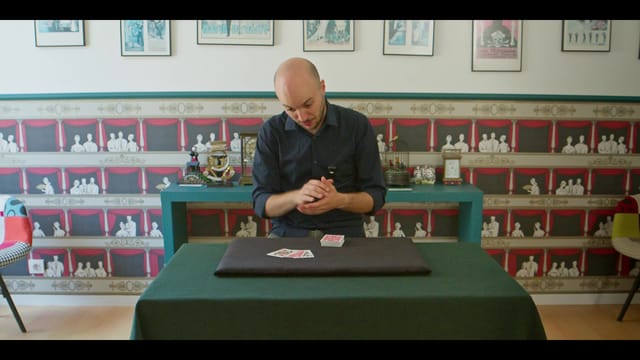
You place the four aces on the table. Three indifferent cards go on top of each ace. One by one, the aces vanish from their piles and travel to join the "leader" ace. By the end, you're left with four aces in one spot and three indifferent cards in the other, leaving the audience with no explanation for how the cards moved.
How It's Structured
The lesson starts with a full performance so you can see the rhythm of the routine. Eloy then breaks down the "one ahead" method, which is the engine that makes this trick work. He explains the specific handlings for the vanishes and the reappearance, ensuring you understand the logic behind every move.
What's the Difficulty
This is an intermediate routine. It doesn't require heavy sleight-of-hand, but it does require smooth handling of a small packet of cards. You'll need to learn the "one ahead" principle, which means you're always one step in front of what the audience thinks is happening. If you can handle a deck of cards comfortably, you can learn this with a few practice sessions.
About Eloy Fernández
Eloy Fernández is a researcher and performer known for his analytical approach to magic. As the director of the Museo de Magia de Galicia, he doesn't just teach you how to do a trick; he explains the structure and theory that make it effective. His teaching is clear, direct, and rooted in the traditions of Spanish card magic.
What's Included
- The "one ahead" principle for slow ace assemblies
- Bryce's Wiggle for showing cards naturally
- Gaby Pareras' "waiter theory" for a clean, visual ending
- Techniques for the "vanishing" phase of each ace
- How to manage the indifferent cards so you never look cluttered
Frequently Asked Questions
Do I need a special deck?
No. You can do this with any standard deck of 52 cards. It's completely impromptu.
Is this the same as McDonald's Aces?
No. McDonald's Aces uses gimmicked cards and all the aces vanish before they are shown together. Jazz Aces is a "slow" assembly where each ace is shown to arrive before the next one vanishes.
How do I know if my "one ahead" handling is clean?
Eloy covers the "waiter theory," which helps you check your final position. If the cards on the table look like a "visual summary" of the trick, you've done it right.