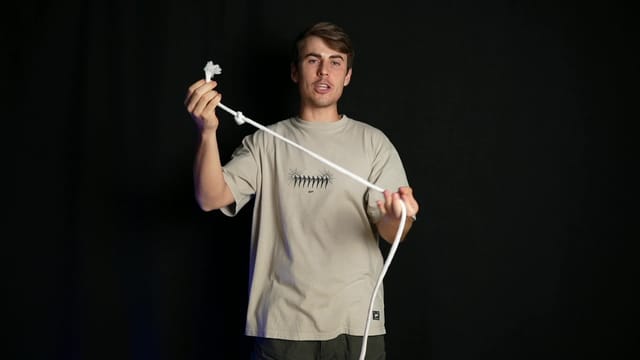
Jumping Knot
Where This Fits
You'll use this routine when you want a visual, standalone effect that doesn't require a table. It works great for street magic or casual gatherings where you have a bit of space to move around and show a full-length rope.
What Makes It Practical
This effect uses a simple two-meter piece of rope, which you can easily carry in a pocket or bag. Because it relies on clever positioning and a basic phantom knot, you don't need complex gimmicks. You can perform it standing up, making it ideal for walk-around situations.
What You'll Learn
You'll learn how to combine a phantom knot with a one-handed knot to create the illusion of travel. The routine centers on managing the spectator's attention—you'll use your body and the length of the rope to hide the mechanics while making the movement look instantaneous.
We cover two main ways to perform this:
- The Horizontal Method: Performed entirely in the air, keeping the action in front of the audience.
- The Vertical Method: Using your foot to anchor one end of the rope. This version is often more deceptive because the distance between your hands makes the "travel" of the knot look much more impossible.
About the Instructor
Julio Ribera is a Spanish magician who specializes in making close-up magic feel spontaneous. He focuses on practical, real-world routines that you can perform anywhere, relying on his experience in street magic to ensure every move is covered by natural misdirection.
What's Included
- Phantom Knot Basics: How to tie a knot that looks real but undoes with a simple pull.
- One-Handed Knot Technique: The secret to creating a knot instantly using only one hand.
- The Anchor Principle: Why stepping on the rope changes the entire dynamic of the trick.
- Timing & Misdirection: How to use your eyes and voice to guide where the spectator looks.
- Troubleshooting: Tips for keeping the move invisible, even when people are watching closely.
Frequently Asked Questions
- Can I do this with any rope? Yes, just make sure it’s roughly two meters long so you have enough room for the knots to be clearly separated.
- How much space do I need? The vertical version works best if you have enough room to stand and pin the rope to the floor, but the horizontal version can be done in tighter quarters.
- Is this good for beginners? Definitely. The moves are straightforward, and the focus is more on your presentation and timing than complex finger work.