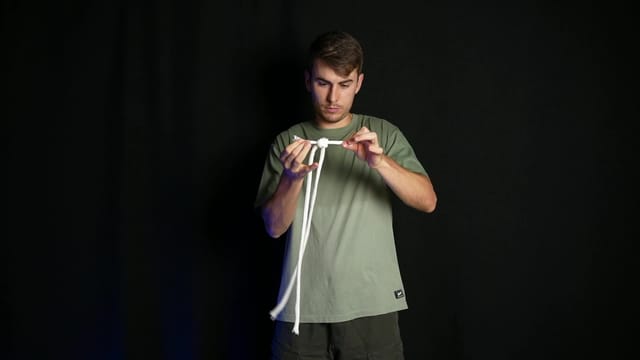
Jumping Knot: Two Handlings for Closing a Restoration
A knot that slides off at the finish
The jumping knot serves as a closer for a restoration or another routine that reaches the rope position described in the tutorial. The presentation shows two segments apparently joined by a knot; at the end, the knot slips off and leaves a whole, examinable rope.
Julio Ribera presents a performance and explanation of two ways to set up this climax. It is an ending to integrate into a routine, not a tutorial on a complete cutting sequence from the beginning.
The direct handling
The explanation starts from the final state of certain rope effects. You will study how to rearrange that position, form the knot, and maintain front cover during the change.
Julio discusses different ways to assist with your fingers so that the grip feels comfortable. He then connects the adjustment of the knot with the pulling action that allows it to separate.
A more elaborate display
The second option incorporates a preliminary gesture with both hands so the audience can more clearly see the apparent tying action. This then flows into the same closing mechanism.
The simpler, direct version is compared with this option, which adds visual clarity. The goal is to let you choose the handling that best fits your presentation and the position you are coming from.
The blow and the conditions for the ending
Sometimes the knot may momentarily stay suspended and drop off with a gentle blow. The instructor explains that this depends on how it was tied and how the rope settles; it is not presented as an automatic result on every attempt.
You will need a rope and to reach the handling state that serves as the starting point. It is helpful to know a classic restoration and its knot work to integrate it smoothly. The lesson covers the ending and its two presentation options, without requiring any commercial magic props.