The Golden Age of Magic
From Phantasmagoria to Cinema
This history lecture offers an interpretation of the golden age of magic through its shows, its leading figures, and its relationship with the culture of each era. Ramón Mayrata connects illusionism with literature, theatre, science, and new ways of representing imagery.
The guiding thread is the shift in sensibility: how different ways of understanding reality and imagination gave rise to distinct styles of magic.
Romantic Imagination and Realistic Magic
The presentation begins with Robertson and phantasmagoria. It discusses the apparitions, the atmosphere of his shows, and their connection to the Gothic imaginary, ghosts, and the fear of the supernatural. Scientific cabinets and experiences that the audience could interpret as wonders also make an appearance.
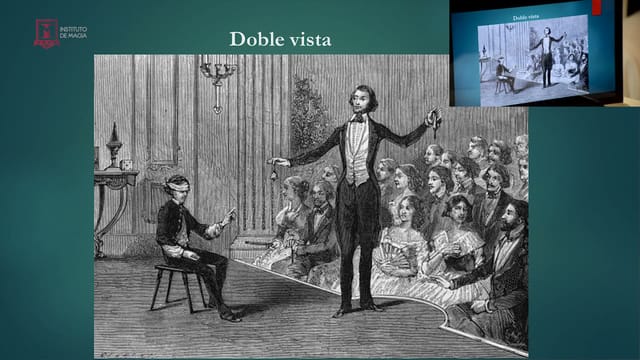
Mayrata contrasts this romantic sensibility with the realistic poetics he identifies in Robert-Houdin: his patter, the space of his theatre, his props, and automata. Among the examples discussed are second sight, the ethereal suspension, and Antonio Diavolo.
The focus broadens to Hofzinser and a magic close-up to the audience. It covers the format of his sessions, his card magic repertoire, and the preservation and subsequent study of his materials.
Theatres, Phantoms, and Grand Illusions
The lecture covers spectral illusions and their relationship with optical research. The Royal Polytechnic Institution, Dircks, Pepper, and Pepper's Ghost appear, alongside Stodare's Sphinx.
Spiritualism is treated as a cultural and theatrical phenomenon. The Davenport brothers and Maskelyne's presentations serve to distinguish shows advertised as manifestations of spirits from their recreation as illusionism.
The Egyptian Hall allows for an exploration of dramatized magic and the work of artists such as Maskelyne, Charles Bertram, Buatier de Kolta, and David Devant. The examples bring together automata, card magic, and grand illusions, alongside issues of authorship, adaptation, and copying. The presence of Partagás and spectral magic in Spain is also discussed.
Images that Endure and Move
The magic lantern, dissolving views, photography, and the study of movement are linked to the emergence of new forms of spectacle. Photographs of alleged ghosts and theatrical illusions illustrate how the relationship between an image and what the audience believes they are seeing changes.
The journey concludes with Méliès: his ties to magic theatre, the filming of stage routines, and the use of cinematic techniques to build fictions. The presentation introduces him as a bridge between the stage and cinema.
Format and Requirements
This is a lecture supported by historical examples, images, and discussed excerpts. It requires no magic props or prior sleight of hand. Its objective is to recognize styles, artists, and cultural transformations that help place illusionism in its proper context.