Thread Levitations: Materials, Hookups, and Lighting
Choosing and Preparing a Levitation System
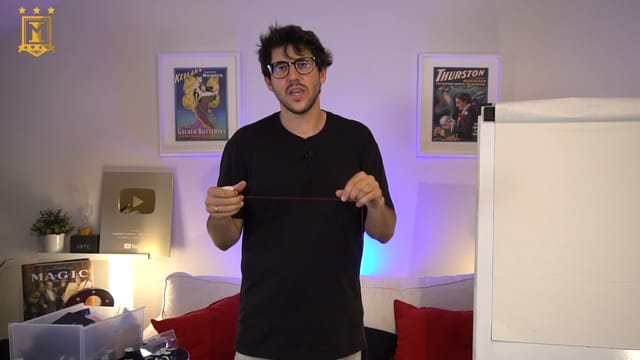
Borja Montón presents the materials he uses to make objects fly in parlor and stage magic. The class combines a practical explanation of hookups and balance with a comparison of threads, motors, and guidance systems. The goal is to understand the possibilities each resource offers and what conditions it requires before incorporating it into a performance.
Threads for Different Objects and Spaces
Cotton, nylon, and Kevlar are compared, paying attention to fineness, strength, shine, and the weight of the object. The instructor differentiates between the needs of a small levitation versus a larger stage element, where audience distance and lighting control also come into play.
Among the materials shown or discussed are Gravity thread, those used in devices like the Spider Pen and Leviosa, fishing line, and thread intended for rod building. These are examples of selection and usage experience, not a mandatory shopping list or a guarantee that the same thread will work for any effect.
Hookups, Balance, and Movement
Using a butterfly and a cigarette, the instructor explains how to prepare the rigging for a light object and find its balance point. The demonstration uses visible thread to make it easy to follow and includes adjustments for the knots and leveling.
It also discusses how to coordinate the object's movement with the performer's, avoid dragging out a presentation too long, and adapt the approach to other lightweight items. The hookup takes inspiration from Steve Fearson's work; this principle is studied and some movements are shown without teaching his full routine.
Reels and Thread Retrieval
A reel allows you to retrieve the thread. The class shows different devices and compares their use based on power, drive type, and movement smoothness:
- A simple button-activated motor and a John Kennedy model discussed from the instructor's experience.
- The PTS programmable system, with a demonstration of handkerchief retrieval and a general overview of its control capabilities.
- A homemade mechanism adapted from a small blower, whose basic construction is described.
The relationship between motor strength and thread resistance is analyzed. The test with a handkerchief includes a breakage, which highlights the importance of compatibility between the two. This introduction shows criteria and operation; it does not replace a rehearsed setup or develop full programming for the devices.
Guiding, Friction, and Stage Props
Materials related to the Okito ball and other floating objects are presented to explain the function of hookups and guides. Pieces with eyelets, ceramic rings, and fastening solutions are shown, discussing how friction and tension affect the path.
Manual control by an assistant is also contrasted with motorized retrieval, and fastenings for handkerchiefs are discussed. The practice ball, Luís de Matos' version, and a floating lamp appear as examples of materials and practical difficulties; their full routines are not taught.
Lighting and Rehearsal Conditions
The final section introduces the relationship between thread shine, the background, and the light on the performer. It explains why it is wise to evaluate lighting alongside the material rather than relying solely on the label "invisible".
This is general guidance for preparing tests under performance conditions, not a complete lighting design or a universal formula for every stage.
What You Need and What Is Included
You can follow the comparison without purchasing specialized equipment. To practice the basic setup, it is helpful to have suitable thread, magic wax, scissors, and a lightweight object whose balance you can adjust. Motors, guides, and stage devices correspond to the applications you choose to explore.
Knowing a full levitation routine is not assumed, but fine handling, tension control, and coordination require rehearsal. The recording lasts approximately 30 minutes. Viktor Voitko's rings and several external references are mentioned to expand on the topic; their explanations and additional downloadable materials are not included here.