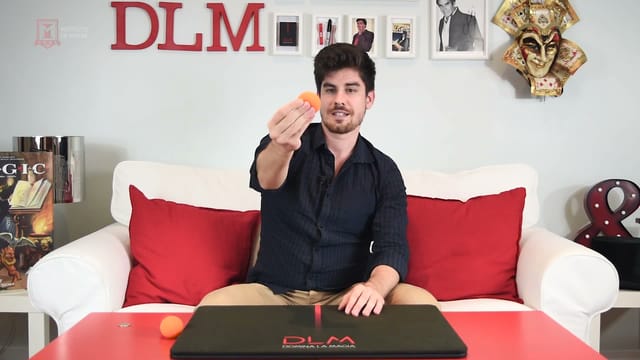
Sponge ball magic: technique and routine in your hands
A complete routine with sponge balls
The masterclass begins with a performance where the sponges appear, multiply, and travel between the magician's and the spectator's hands. The sequence continues with the «always three» phase and concludes with the vanishing of all the balls. Juanma González then breaks down the handling and walks through the routine again to show how its parts connect.
Getting familiar with the props
The introduction compares sizes, firmnesses, and shapes of sponges. It explains how their feel and compressibility influence the technique and discusses ways to condition them. The goal is to find a prop that allows you to work with relaxed hands and natural movements.
It also distinguishes between the conditions of a seated, standing, or cocktail performance. Audience placement and available angles determine which handlings are comfortable; the explanation pays close attention to these differences before moving on to the sequence.
Techniques and naturalness
The technical section includes:
- Finger palm, classic palm, and shifts between positions.
- Ramsay subtlety and the use of natural resting positions.
- Simple productions, double production, and the shuttle pass.
- Basic false transfer and retention of vision.
- Loads and capitalizing on moments of audience relaxation.
Each sleight is explained with repetitions and commentary on coordination, angles, and continuity. In false transfers, both the fingers and the overall action are studied: gaze direction, hand relaxation, and actions in transit. Practice aims to ensure the technique fits the performer's usual way of moving.
Building the sequence and directing spectator participation
The explanation of the routine links production, multiplication, travel between hands, and effects in the spectator's hands. Questions, instructions, pauses, and ways to make each outcome clear before proceeding are all thoroughly covered.
The «always three» phase unfolds with its repetitions, a bogus explanation as a presentation device, and the closer. The final review runs through the sequence at tempo while naming the techniques, connecting what was practiced in isolation to its application within the whole.
Props and rehearsal
The routine uses four sponge balls. Juanma works primarily with two-inch soft balls and discusses alternative sizes. It is helpful to have a table available to study the version shown, accessible pockets, and another person to rehearse the interactive phases with.
The techniques are taught from the ground up, although retention of vision and routine flow require practice. The instructor recommends recording yourself or using a mirror and adapting the movements to your own posture and personality.