Magic on social media: attention, formats and community
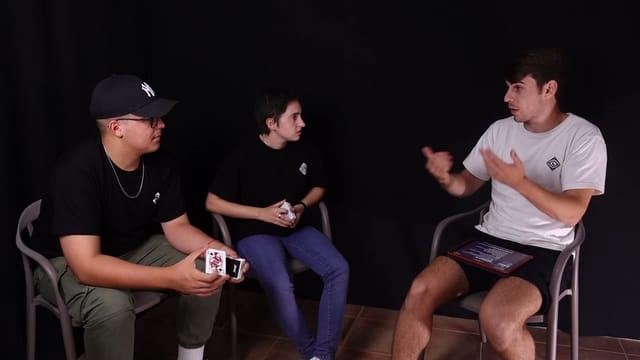
Inmagic and Adrián Lima share their thinking on presenting magic on social media and developing a relationship with the audience. The conversation draws on their experience of creating videos, trying ideas and working together. Its focus is how to present an effect to someone who can move to the next video at any moment: what catches their attention, what makes them stay and what might encourage them to participate.
Naturalness is the starting point. Choose magic you enjoy performing and a way of communicating it that you can comfortably sustain. A video’s interest does not depend only on a trick’s difficulty or on it being the latest novelty. A simple effect can be engaging if the audience understands what is happening and has a reason to wait for the outcome.
Distinguish three moments when planning the presentation: catching attention at the start, maintaining curiosity during the action and delivering a surprise at the end. A question, an intriguing statement or a short story can open that journey. The conversation includes themed examples, such as a Halloween story around a card and the premise that a deck is gimmicked. What is analysed is the expectation these openings create. You do not need to announce everything that will happen at the outset.
Match the length to the interest the effect can sustain. A monotonous succession of tricks can lose the spectator even when the magic is good. The conversation favours short pieces but cites different lengths; the useful lesson is to watch the rhythm and avoid stretching an idea beyond what it has to offer. There is no universal duration here that guarantees attention.
Start with the equipment you have. The filming examples use phones, simple tripods and even improvised supports. The practical condition emphasised is that the magic must be visible: if the action takes place in the hands, the framing must show them rather than focusing only on the face. The most expensive camera or latest phone cannot replace a clear presentation.
A recognisable posting frequency helps the audience know when to find you. The speakers describe periods of daily posting and of one or two videos a day, with times chosen for different audiences. These are examples from their experience, not a compulsory schedule. The principle is to maintain a consistency you can sustain and give each piece room; the conversation itself notes that tours or travel can reduce the time available for filming.
To discover which format suits you and your audience, try different options: magic with music, a routine presented to camera, or a trick with friends whose reactions become part of the video. When something gets a good response, identify the idea and structure that worked. You can keep these while changing the trick or object: the example of a card finding another card becomes one of a pencil serving that function. This makes use of a resource without endlessly repeating the same trick.
Alternate those familiar structures with new experiments. Having several formats gives you resources when creative block appears and prevents both the person filming and the person watching from always encountering the same thing. It also allows you to test ideas that seemed unpromising: the conversation recalls simple drafts that ended up being very well received. Personal taste is a starting point, but the audience’s response can surprise you.
The creative process described often starts by choosing an effect you already know how to perform, then finding its story and opening. Think about how you want the effect to be perceived and what question it might raise. Comments can also provide material: a request, doubt or challenge can give a clear reason to film the next piece. Listening to the audience provides ideas; a promise of likes in a comment does not guarantee that response will materialise.
Participation is approached in three ways: letting the surprise prompt a spontaneous reaction, explicitly asking for a comment or share, and integrating a viewer action into the presentation. The example of a trick with dots or colours combines indicating a choice, commenting on it and sharing the result with a friend. Its usefulness lies in connecting the invitation to what the person has just experienced, rather than treating it as an isolated line at the end.
The false explanation is another presentation device analysed. An apparent explanation is announced, and the effect ends by contradicting what the spectator expected; the magical surprise is joined by the surprise of having anticipated something else. The conversation uses this idea to discuss curiosity and watching a video again. The methods of the vanishes, double lift or mentalism tricks mentioned are not developed: to apply the idea, work with magic you already know.
Experience can guide further experiments, but it cannot ensure results. Repeating a previously successful structure with variations and paying attention to audience requests provides information. Assess the response against your own starting point, rather than demanding that every video reach an enormous figure. The conversation also recounts how a verbal stumble or an odd detail in the background generated discussion. These are anecdotes about attention, not an obligation to introduce mistakes or a causal formula for growth.
The examples of TikTok, Instagram and other networks come from the period when the conversation was recorded, closely associated with quarantine. Their platform preferences and explanations of distribution reflect that experience. Retain clarity, curiosity, consistency and observing the response as working principles; statements about algorithms or the effect of certain comments are not verified technical rules.
The reach of a piece and the relationship with a community are different things. A recognisable schedule, continuity and listening can give people reasons to return to the profile. The experience of the joint Magic Twins account is used to discuss sharing magic and opportunities that arose later, without turning that journey into a promise. The aim expressed at the end is to find people interested in magic and in attending a show, rather than seeking fame for its own sake.
Take care of your expectations too. A video you like may receive less attention than another, and metrics depend on factors you do not fully control. The speakers recall frustration and hostile comments, and advocate continuing to create out of an interest in magic without demanding everyone’s approval. The lesson is not to make a follower count or every comment the measure of your satisfaction.
To bring these ideas to a first recording, choose a familiar effect, define an opening that sparks curiosity and check that the action is clearly visible. Decide the role of the story and viewer participation. Then observe the response and try a variation in structure or trick, without expecting perfection on the first attempt. The conversation ends with precisely that encouragement: learn by doing, share the magic you enjoy and improve through practice.