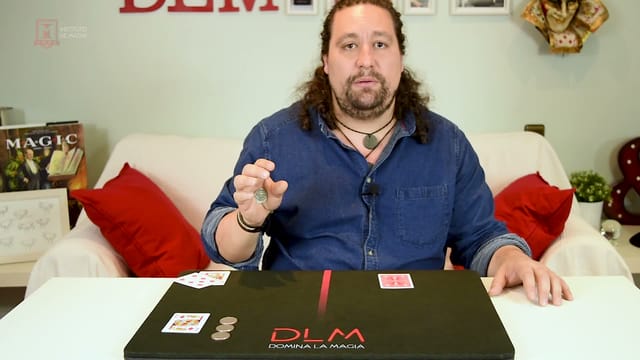
Matrix with Spectator Participation
The Spectator as the Star
Four coins covered with cards assemble progressively into one corner. In this version, the spectator handles part of the cards, performs the magical gestures, and uncovers the travels. Miguel Ángel Gea performs the Matrix and then explains how to construct this shared experience.
Participation is not limited to asking someone to confirm what has just happened. We study how to give them concrete actions and room to react, letting the effect seem to stem from their own hands. The instructor links this approach with his research on the hands of the magician and the spectator, discussing antecedents and versions of the Matrix.
Technique and Cover
The class breaks down a coin steal presented as a Paul Harris technique with a detail from Aurelio Paviato. We work on the grip of the card, contact with the close-up pad, hand relaxation, and angles from different heights. Pinches, the transition to the classic palm, and a setup action for the climax are also explained.
The emphasis is on ensuring the move retains the appearance of a natural, everyday action. The cover provided by the cards and the helper's arms is integrated with misdirection, without replacing careful technique. We discuss small habits that can develop over time and the need to review the handling from the audience's perspective.
Instructions, Pacing, and Interaction
The explanation reconstructs each travel and indicates when the spectator should intervene. We study how to convey that an action is imaginary, what to do if the person doubts an instruction, and how to stay calm when their pacing doesn't match the expected timing.
We also analyze the transition from surprise to relaxation, the continuity between actions, and the attitude when showing the departure and arrival spots. The magician maintains the pace without demanding that the assistant have stage experience. Making them feel comfortable and allowing them to bring their own personality is part of constructing the effect.
You will need four coins, four cards, a padded close-up mat, a table, and a spectator. The technique is explained in sections; it is best to be comfortable with palms and basic coin handling before linking it with the instructions. Rehearse both the angles and the assistant's interventions, leaving room for responses and timings different from your own.