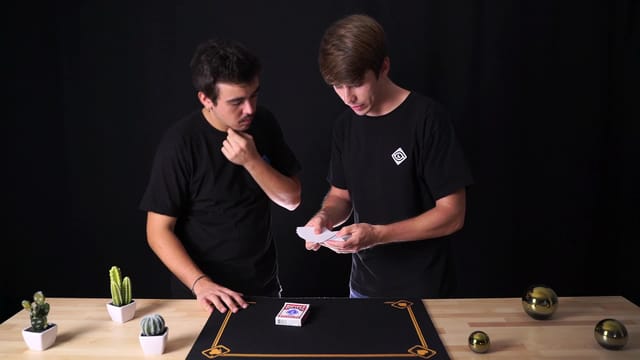
Mental Photography Deck Routine
What You'll Be Able to Do
You'll learn to handle the Mental Photography deck to perform a visual routine where an entirely blank deck changes into a standard, printed deck and back to blank again. This is a powerful effect that lets you show the cards are blank, riffle to show them printed, and clear the deck instantly.
How It's Structured
This lesson starts with a live performance to show you how the effect plays for an audience. Then, you'll dive into the mechanics of the deck, learning how to combine the properties of roughing fluid and short cards to control exactly what the spectator sees. You'll walk through the specific handling needed to show the deck as blank versus printed.
What's the Difficulty
This routine is very accessible because the deck does most of the work for you. It scores a 25/100 because while it requires no complex sleight of hand, you do need to practice the specific riffling and pressure techniques to ensure the "blank" or "printed" cards show at the right time. Once you get a feel for how the cards grip together, you'll be able to perform this with confidence.
About the Instructor
Julio Ribera is a seasoned performer and educator who specializes in making complex-looking magic easy to learn. He focuses on practical, real-world handling rather than abstract theory, ensuring you can perform the routine immediately.
What's Included
- How the roughing fluid principle keeps blank and printed cards paired together
- Using the Svengali principle to control which side of the cards is revealed
- Specific riffling techniques to show the deck as blank or printed at will
- Managing the orientation of the deck to trigger the visual transformation
- Tips on applying the right pressure when spreading the cards
Frequently Asked Questions
Can I skip around or should I watch in order?
Watch in order. Seeing the performance first gives you the necessary context for why the mechanics in the second video matter.
How much practice between sections?
Since it's a gaffed deck, you'll spend most of your time getting comfortable with the riffling and cutting. Spend 20-30 minutes getting a feel for the deck, and you'll have the basics down.
Is there a way to check if I'm doing it right?
Yes. If you look at the deck from the side while riffling, you should be able to see the cards "sticking" or "dropping" exactly as described. If you can clearly see both sides of the deck as blank or printed, you're on the right track.
What if I get stuck on one part?
Focus on your pressure. If the cards aren't separating or showing the correct side, you're likely pressing too hard or too light. Adjust your grip slightly, and it usually solves the issue.