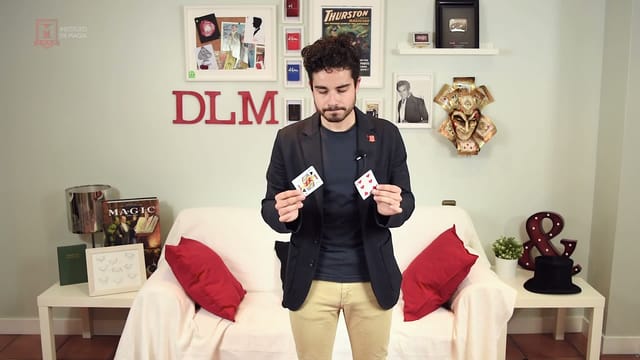
Perfect Production: Multiple Card Productions
From single productions to multiple productions
G. Alexander reviews the horizontal Perfect Production and explains a vertical variant that allows you to chain productions with a shorter travel path. The work progresses from a single card to successive productions and simultaneous productions of two or three cards.
The explanation compares the positions and movements of each variant, paying attention to cover, finger relaxation, and the clarity of the production. The goal is to make the cards appear to emerge from the hand and ensure the sleight does not overshadow the visual image.
Control, naturalness, and rhythm
The lesson covers how to prepare a manageable packet, control the number of cards, and maintain a natural-looking open hand. It includes a practice exercise using a small paper ball to get used to relaxing the non-working fingers.
Both hands are practiced separately before combining them. The coordination of arms, hands, and small impulses helps distinguish each production and prevents repetition from turning into a mechanical display. Angles and the influence of the card finish on visibility are also discussed.
The tutorial concludes by linking the variants into a short practice sequence: single productions, successive productions, and groups of cards, capped off with a quick climax and a bow.
Materials and requirements
You will need a flexible deck of cards suitable for manipulation, prepared and curved as explained. Options with dark edges and their relationship to performance angles are discussed. The paper ball is used solely as a practice exercise.
It is helpful to know the basic Perfect Production, which is reviewed at the beginning. Multiple productions require practice in control, coordination, and rhythm before incorporating them into a routine.