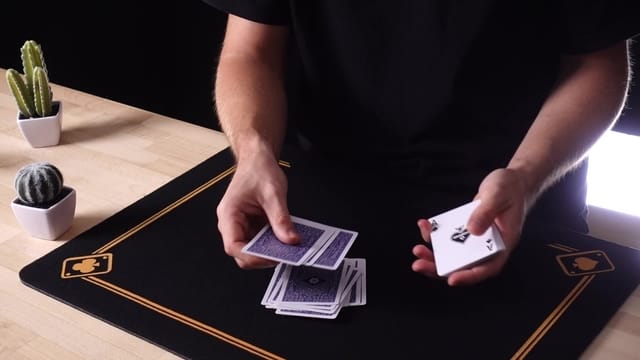
Psychological Force
The Common Mistake: Rushing the Deal
Most people try to force a card by dealing at a constant, robotic speed. This makes the spectator feel like they are watching a machine rather than making a choice. When the rhythm is too predictable, the force loses its natural feel, and the spectator stops paying attention to the "fairness" of the moment.
Why It Matters
When you master the timing of the deal, you control the pace of the entire trick. By using the natural social tension of silence, you make the spectator want to stop you quickly. This turns a mechanical procedure into a genuine moment of choice, leaving them convinced that they picked the card at the exact moment they wanted.
What You'll Learn
You will learn a classic force popularized by Dani DaOrtiz. This technique uses a pinky break to keep your target card ready and relies on your ability to adjust the speed of your dealing based on the spectator's reactions. You’ll discover how to use silence as a tool to pressure the spectator into saying "stop" exactly when you want them to.
About the Instructor
Julio Ribera is a Spanish magician and educator with over a million followers. He focuses on making magic accessible by breaking down complex sleights into practical, real-world applications that you can use in any street or close-up setting.
What's Included
- The Pinky Break Setup: How to position your target card for a clean force.
- Speed Control: Adjusting your deal pace to hit your target every time.
- Psychological Pacing: Using silence to influence the spectator's decision.
- Handling the "Late" Stop: How to manage the situation if they don't stop you early enough.
Frequently Asked Questions
What if I’ve been doing it wrong for years?
That's fine. This force is all about the rhythm of the deal. If you've been dealing too fast, start focusing on varying your speed. You’ll see the difference in how the spectator reacts immediately.
Is this the only way to force a card?
No, but it’s one of the most natural. It looks like a standard procedure, which makes it very hard to spot as a trick.
How do I know when I’m doing it right?
You’ll know you’ve got it when the spectator stops you without hesitation. If they feel like they had a fair choice, you’ve performed it perfectly.