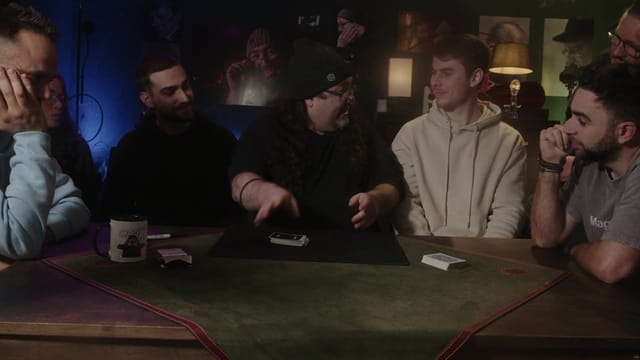
SAC: Cut Sequence and Two Applications
SAC stands for Cut Sequence (Secuencia al Corte). Dani Daortiz develops its core concept, part of the handling, and two applications: a card at any number and a card that appears to pass through the table. The lesson brings together two performances and an explanation that connects the technique to how the spectator interprets the actions.
Linear Thinking and Lateral Thinking
The explanation begins with the distinction Dani makes between the reconstruction created by the spectator and the resources the magician uses to guide that interpretation. It examines how to break a pattern that might suggest a solution while preserving another apparent meaning for the action.
The examples use groups of red and black cards, selections, and shuffles. Dani includes a construction he attributes to Harry Lorayne to illustrate how changing the structure can make a familiar principle less recognizable.
The content is presented as his application of these concepts to magic. References to classic effects serve as examples and do not turn the lesson into a comprehensive course on every routine mentioned.
Shuffle and Control with Spectators
A lateral shuffle is explained in which several people handle packets while the material of interest is preserved. The number of packets and the distribution of actions relate to the interpretation of what appears to be shuffled.
An example of control within a situation presented as a joke is also developed. It works on the link between an instruction, the value given to an action, and how information is subsequently retrieved.
Preparing and Understanding SAC
The system requires an ordered sequence of a complete suit from a standard deck. The explanation shows its basic setup and examines the relationship between a cut, the number of cards taken, and the card left available for the handling.
From there, it explores how to place the constructed card in position or keep it controlled for another resolution. The value and suit are obtained through separate actions by the participants; it is not simply a matter of asking them to freely name any card.
Dani discusses various placement possibilities and suggests using the concept to create other applications. The scope of this lesson is the foundation and the two routines developed, rather than an exhaustive monograph on all possibilities of SAC.
Card at Any Number Application
In the first performance, the position, suit, and value are obtained through cuts, packets, and counts by the participants. The explanation walks through the organization of those actions and shows how they produce the final position.
Attention is paid to how the packets are offered and the necessary size and cut conditions. The appearance of freedom belongs to the presentation; learning includes how those conditions are built.
The finale brings the data together and reveals the card at the resulting number. The principle functions structurally, but its presentation requires maintaining the setup and guiding the actions precisely as taught.
Card Through the Table Application
The second application uses the same foundation to set up a card whose value and suit are obtained separately. Next, the production is developed that makes it appear to pass through the table.
The explanation teaches a finish with the hand beneath the table and clarifies the difference regarding the resolution that appeared in the recorded performance. Setup, cover, and the timing of revealing the arrival are studied, without treating the two handlings as identical.
Materials and Working Method
You need a standard deck with the complete suit set up as explained. The table application requires a surface and position that allow handling beneath it. There is no need to purchase a special commercial deck.
The content includes how to preserve the sequence during shuffles and discusses the possibility of building that order during a performance. Practice combines cuts, quantities, group coordination, and communication with the participants.
Dani explains the specific conditions of the two applications and leaves other resolutions open for the same concept. Mentions of his publications on sequences provide context; the necessary setup and basic handling are developed in this lesson.