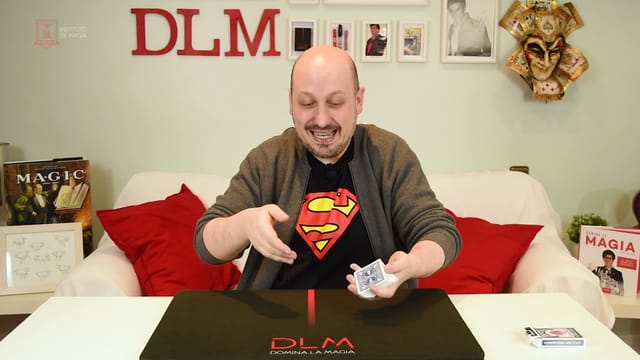
Si Stebbins: Three-Card Divination and Poker Deal
Three-Card Divination
The spectator handles the deck under the table, cuts, and turns over three cards that are later identified. Woody Aragón explains the classic approach and its adaptation to multiple cards, the instructions the participant needs to understand, and how to build a progressive revelation.
The explanation connects the available information with the Si Stebbins stack structure and examines how to maintain the order to continue working with the deck. It focuses on recalling the effect's conditions, the naturalness of the actions, and the pauses that set apart the three revelations.
Mixing and Displaying a Stacked Deck
The Charlier Shuffle is taught, along with its practice and a vertical display that shows the faces of the cards. The technique comes with tips on achieving a casual appearance and allowing the spectator to participate in the cuts.
Ways to introduce a setup deck into a performance are also discussed, including the justified use of differently colored decks. These are organizational and presentation resources that help integrate the effects with the rest of your repertoire.
Poker Demonstration
The lesson develops a four-player deal featuring increasingly valuable poker hands and culminating in a royal flush. It explains the necessary setup, the presentation of each hand, and the optional use of the Erdnase cut as a gesture of apparent skill. The progression of the hands is designed as a closing piece for that deck.
Materials and Requirements
You need a complete deck already arranged in Si Stebbins order and a table. You must know the structure of that stack and the relationships between values and suits. For the deal, a short-corner card is used; you should know how to locate it by touch. The Charlier Shuffle and the optional cut are explained in the footage.