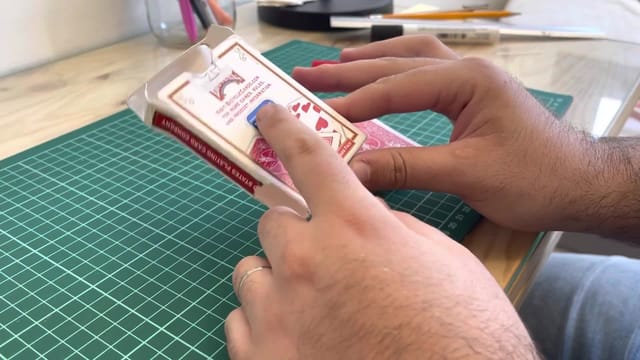
Stripper Deck: Card Divination with the Tuck Case
A card seemingly identified by sound
The spectator shuffles the deck, selects a card, remembers it, and returns it to the deck. Later, they place the cards back into the tuck case and close it. Julio Montoro then uses a listening presentation to reveal the chosen card.
This lesson teaches the procedure behind this divination using a stripper deck and an additional modification to the tuck case. It includes a recorded performance with a spectator and a full walkthrough of the routine. The strength of the routine lies in combining audience participation, the use of the tuck case, and a peek within a presentation that attributes the result to hearing.
The necessary props and preparation
You will need a stripper deck—a magic prop available at magic shops—along with its tuck case. The class begins with this specialized deck, explaining its orientation principle and how to identify the working edge. It also uses a marker and a utility knife for the preparation demonstrated in the tutorial.
Montoro shows how to mark a small orientation cue on the backs, making it easy to know how the deck is oriented without having to search for the correct side every time. The explanation covers which reference point to maintain and how to check it during handling.
Next, he prepares a window in the tuck case. Its placement, practical size, and natural hand cover when presenting the box to the spectator are carefully examined. The tutorial links this construction to how the cards are inserted and removed, going beyond the basic mechanics of the stripper deck.
Shuffles, selection, and return
Spectator participation is broken down along with its handling requirements. The deck can be mixed using shuffles that preserve the orientation of the cards. Montoro also advises what to do if that condition is accidentally lost: move on to a different trick rather than pushing through with a ruined setup.
You will learn how to present the selection, have the spectator hold the card against their chest, and coordinate its return with reversing the deck's orientation. Following this, the lesson covers locating and squaring the card after the mix, including how to execute a cut if the position requires it.
These actions highlight why the routine demands more than just knowing how a stripper deck works. The way you receive the cards, square them up, and address the spectator sets up the conditions for using the tuck case.
The glimpse and the revelation
Montoro reviews how to cover the preparation of the box, guide the deck into the necessary orientation, and let the spectator finish closing it. The patter about listening to the sounds provides cover for the actions that follow.
The explanation continues with holding the card, extracting it, and seizing the moment to get a glimpse of the information. He then shows how to gather the cards back together and reveal the selection. The auditory presentation serves as the premise of the effect, while the technical training focuses on handling the stripper deck and the glimpse.
Resetting to the initial state
The finale includes how to pack away the deck to restore the card orientation and leave everything ready for the next performance. This detail lets you study the entire journey right past the climax, rather than stopping the moment the card is known.
This is an ideal lesson for anyone who already owns a stripper deck or wants to put one to fresh use through a tuck case routine. The principles, preparations, and required sleights are clearly taught, though you should practice the orientation, cover, box placement, and timing of the peek. The demonstration allows you to compare this work against a routine performed live for a participant.