Three-Book Test: Crafting and Performance
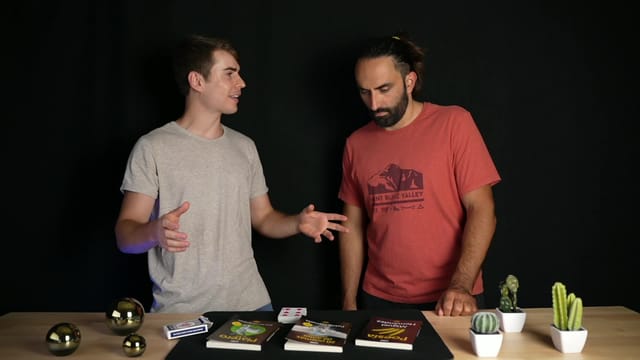
This lesson breaks down a Book Test using three distinct-looking books. The spectator obtains a page number and chooses a book while the magician remains uninvolved in the selection. Afterward, a progressive revelation connects words and images from the reading. Julio Ribera includes a live demonstration with a participant, the preparation of the books, and the handling of the patter.
Preparing the Books at Home
The crafting video explains how to build the set using three identical copies and two other books with different covers. One of the three copies remains untouched, and you work on the others to obtain the routine's material. There is no need to purchase a ready-made commercial Book Test.
It covers separating the covers according to the binding type, gluing, and aligning the edges and spines. Julio uses a glue stick, discusses how to adjust for thickness differences, and recommends keeping weight on the books once finished. The work modifies and can damage the copies used, so it is best to choose books intended specifically for this preparation.
Page Selection
The explanation presents a card example to determine the page number. It includes a double-backed card in the demonstrated handling and explains the setup and selection via a cut. The instructor clarifies that any other familiar force can be used; that card is simply the resource used in his example and not a mandatory purchase for every version.
The preparation requires memorizing the information to be revealed and adapting the number and the patter to the crafted material. There is no promise of being able to divine a reading from freely chosen ordinary books without that preparation.
Performance and Revelation
Julio compares a performance featuring multiple spectators—each with a book—with a one-on-one presentation. It covers how to show that the pages are varied without turning the performance into a cross-check that is not part of the handling.
The revelation is structured in stages: colors, emotions, and images before reaching the specific information. The demonstration allows you to observe that pacing, and the explanation encourages developing your own patter, avoiding limiting the effect to immediately blurting out a word.
You will need the five starting books for the demonstrated construction, glue, materials to adjust the covers, and—if you choose the page force example—a deck with the corresponding card. This is a routine requiring prior preparation and presentation work; the lesson teaches both the crafting process and a specific way to perform it.