Three Plus One: Sponge Balls Across
Three journeys, with clarity built into each phase
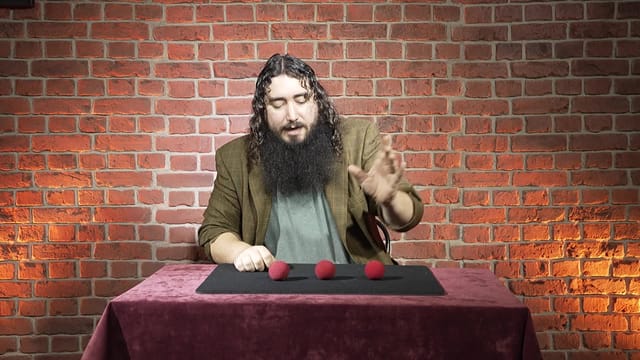
Xulio Merino demonstrates and explains a balls-across routine in which three sponge balls travel from one hand to the other. The last ball joins the others in the spectator’s hand. This version uses four balls in total: three that are shown and one extra for the handling.
The lesson includes a demonstration, a complete explanation and two brief reviews of the technical sequence.
Optional productions and a direct start
The opening produces the balls through a presentation involving an invisible “essence”. Xulio explains how to link palms, the Shuttle Pass and displays to arrive at the three visible balls.
He also suggests starting directly with the three balls on the table and the setup already in place. This starting point lets you concentrate your practice on the journeys before adding the production sequence.
Keeping the extra ball in reserve for the second phase
One central structural decision is to have an extra ball available and save its use for the second journey. The explanation shows how this distribution lets one hand be shown clearly in the first phase and the other in the next.
You will study the placement of the balls, the false transfer, displays of two balls as one and the coordination of closing and opening the hands. The brief reviews let you revisit the relationship between these actions and the revelations.
The final journey in the spectator’s hands
The ending incorporates a Shuttle Pass, the addition to the participant’s hand and the disappearance of the last ball. Xulio explains the instructions, the pointing gesture and the continuous action up to the moment the spectator opens their hand.
The routine ends with the three balls gathered in the spectator’s hands. He also discusses the possibility of linking it to an Always Three routine; that continuation requires adjusting the setup to the trick you want to perform next.
What you need
You will need four sponge balls, a working surface and accessible pockets. The explanation discusses loading options for standing and seated performance. Familiarity with finger palm, the Shuttle Pass, the Vernon-style false transfer and the displays is useful.
Practice brings together the clarity of each journey, the alternation of the hands and the final participation. You can work on the main sequence first and add the optional opening later.