Thumb Fan
The Secret to a Perfect Thumb Fan
Most people think a good fan comes from pushing the cards hard. It actually comes from where you place your thumb. If you're off by even a half-inch, the cards will clump together or the circle will look lopsided. The secret is finding the exact pivot point that lets the cards glide over each other with almost no effort.
Why This Changes Your Magic
The thumb fan is like a magician's handshake. It's often the first thing people see you do. Imagine asking someone to pick a card, and instead of just spreading them messily on the table, you snap the deck into a perfect, even sunburst. It immediately tells the audience you're a professional. Beyond looking good, it's a practical way to have a card selected or to show the deck is "normal."
Mastering the Grip and Sweep
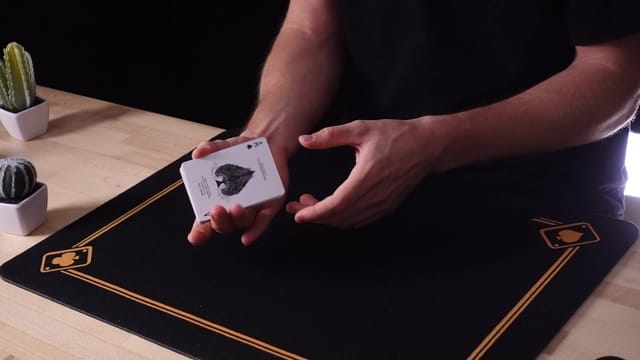
Julio Ribera breaks down the mechanics so you don't have to guess. He shows you exactly where your index and middle fingers need to sit on the bottom corner to create a stable base. You'll learn the "sweep" motion—how to tilt the deck slightly and use your thumb to apply pressure in a circular path. He also explains why the quality of your cards matters; trying this with an old, sticky deck is a recipe for frustration.
About Julio Ribera
Julio is a Spanish magician and cardistry expert with over 1.5 million followers. He specializes in street magic and visual card handling. His teaching style is direct and focused on "learning by doing," helping you skip the fluff and get straight to the technique.
What You'll Learn
- The specific "mechanic's grip" starting position
- Where to place your fingers to create the perfect pivot
- How thumb placement changes the size of the fan's center
- The exact pressure needed to get an even spread
- Why deck quality is the "make or break" factor for this move
Questions You Might Have
Is this move just for show?
No. While it looks great, it's a functional way to let a spectator choose a card or to prove that the cards are all different and well-mixed.
My fans keep coming out clumpy. Why?
It’s usually one of two things: your thumb pressure is uneven, or your cards are too old. Julio explains how to fix your grip and why a "magic-grade" deck makes this ten times easier.
How long does it take to learn?
You can get the basic shape down in a few minutes, but making it look perfect every time takes practice. It's the kind of move you can do while watching a movie until it becomes muscle memory.
Do I need big hands?
Not at all. Since the move relies on a pivot point rather than stretching your hand across the whole deck, magicians with any hand size can master it.