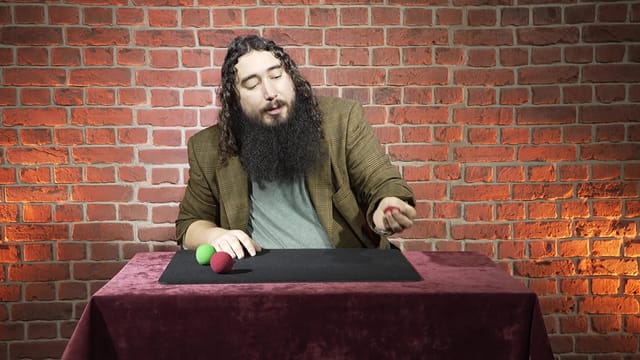
Transporosa: Color Transposition in the Spectator's Hand
Transporosa combines color changes in the magician's hands and on the table with a finale in a spectator's hand. Xulio Merino performs the complete routine and then breaks down its construction, the sleights linking the phases, and audience management.
Using two colors establishes two distinct zones and makes it easy to track which ball should be in each place. The sequence plays with that expectation before moving the action to the participant's hand.
One change feeds into the next
A core part of the explanation is the combination of visual and logical changes. The visual change draws attention, and just when the spectator might feel the urge to check one hand, the other hand presents a new situation that keeps the effect flowing.
Xulio explains why he repeats the same sequence and how he uses the second change to reinforce the first. The rhythm of the presentation is studied alongside the execution of the sleights.
Construction and transitions
The explanation covers the preparation of the balls, showing two as one, the casual change, and the rolling table change. Special emphasis is placed on the thumb pinch and on frontal and lateral angles, especially when adapting the presentation to spectators seated at different heights.
A travel phase between the hands is also covered. Xulio considers it optional within the routine, but explains the function it serves to set up the next situation.
For one of the transitions, he discusses a solution using a false transfer and teaches the previous handling with display changes. He distinguishes this explained material from his reference to another, more complex modern solution that he does not demonstrate in the video.
Bringing the finale to the spectator's hand
Xulio analyzes why handing the balls directly to the participant can be more convincing than passing them first through the hand where several color changes have already taken place.
The tutorial covers showing three as two, placing the balls into the spectator's hand, and taking care of their thumb. These choices affect both the handling and the perception that the participant is in control.
The instructions for the climax are part of the explanation: close your fist, keep it closed, and extract a ball with your other hand. Xulio demonstrates how to phrase these instructions and why opening the hand prematurely alters the flow of the trick.
He also discusses a possible continuation if that unexpected event happens. This is guidance on how to manage the situation, not a second full routine taught separately.
Materials and prerequisites
You need four ordinary sponge balls, two of each color, a surface to place them on, and a spectator for the finale. The close-up pad helps establish the zones during the presentation; no specific design or brand is required.
You should be comfortable with finger palm, displays, color changes, and false transfers. The video explains how to apply them in the routine, along with transitions, attention management, and angle control.
No gimmicked ball or specific commercial product is needed. The lesson brings together the performance of Transporosa and its explanation by Xulio Merino, without promising that the technique will work without practice or with any random audience seating arrangement.