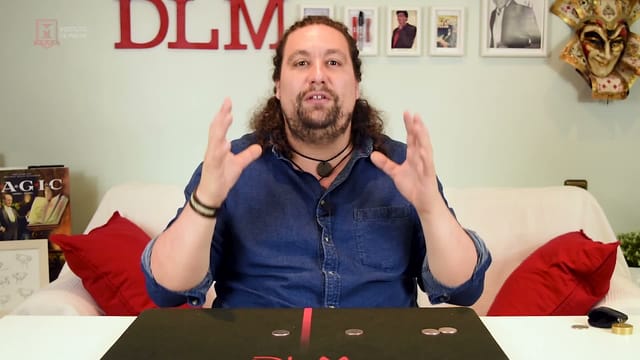
Wild Coins: Silver and Copper Transformations
A Sequence of Transformations
The routine features four silver coins that transform one by one into copper coins. The spectator holds them in their hands, and at the end, they revert to their original appearance. Miguel Ángel Gea explains his version of Wild Coins and analyzes how to build the development and climax of a repeated effect.
The straightforward handling allows focus to be placed on the patter and the relationship with the audience. Gea suggests thinking about what you want to convey with the transformations, using a presentation about the fleeting nature of magic as an example. The explanation connects this concept with gestures and the moment of returning the coins to their initial state.
Working with the Spectator
The spectator's hands act as a container and become the venue for the revelation. We examine how to ask for their cooperation, give instructions, and allow them space to open their hands and show the result. The finale must be given enough time so that both the participant and the rest of the audience can fully perceive it.
The contrast in color and brightness of the coins is also addressed. The performance is designed for a small group, very close to the magician, where everyone can see the hands and recognize each transformation. We analyze how an unclear image can break the rhythm and weaken the effect.
Handling, Materials, and Practice
The silver/copper coin is introduced, a false turnover attributed in the class to Joaquín Navajas is explained, and other handling possibilities are shown. The naturalness of the movements, ease, and distribution of attention are studied within the complete sequence.
For the main version, you will need three silver-looking coins and a gimmick silver/copper coin, available at magic shops. The class also discusses an alternative ending with an additional coin. The spectator's hands make it possible to perform the routine without relying on a container on the table.
It is advisable to practice the orientation and handling of the set before incorporating the patter. The main sleight is explained within the lesson. As an exercise, Gea suggests exploring variations in gestures that maintain the same structure of the effect and help build your own original presentation.