Invisible Thread: Setup, Animations, and Levitations
Understanding the material before using it
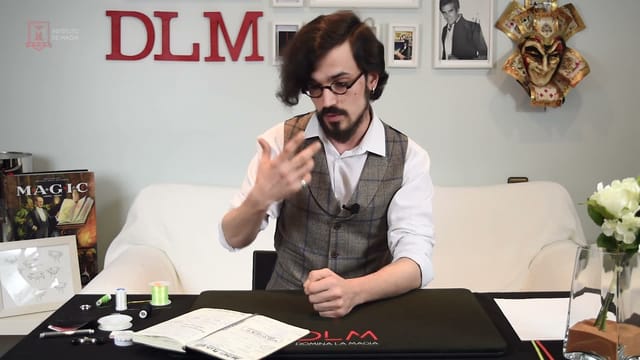
The class introduces elastic and non-elastic threads, their differences in tension and resistance, and the possibilities they offer when working with small objects. Adolfo Masyebra compares materials, ways to carry them, and retrieval systems, linking each choice to what the magician needs to accomplish.
The tutorial explains how to prepare the ends with wax, adjust the length to the performer's body measurements and movements, and store the thread without tangling. It also compares simple carrying methods, such as small cards and straws. Setup is studied as part of rehearsal work, not something to be improvised in front of an audience.
The overview includes dispensers, mechanical reels, and electronic systems. The instructor discusses the differences in tension, thread availability, and recovery after a break. These are alternatives to consider when choosing a setup; the basic examples can also be performed with non-elastic thread and without a reel.
Animating and levitating objects
The explanation distinguishes between vertical and horizontal setups and analyzes how they dictate the object's movement and the actions that can be performed around it. The relationship between tension, distance, height, and path is studied so that a gesture does not cause a break or an unexpected movement.
The examples cover balancing and animating a straw, levitating a ring, and various possibilities with a banknote. For the latter, two preparation methods are compared along with their relationship to balance, suspension, turns, and the final handout. The instructor demonstrates the actions and discusses them while working with the material.
Environment, intention, and presentation
An important part of the study is choosing where and when to perform: lighting, shadows, background, clothing, and spectator positioning. It is recommended to check these conditions during rehearsal and recognize when it is better to perform a different type of magic.
The intention of the gesture is also addressed. The movement of the object must respond to the way the performer imagines the magical action, rather than simply executing the mechanics. Using borrowed objects provides a clear context for the animation and its subsequent examination.
To get started, you will need invisible thread, appropriate wax, a simple holder to carry it, and the objects you want to practice with. The brands and devices mentioned are options, not a mandatory shopping list. The class provides the fundamentals of setup and use; it is best to practice tension and paths calmly before incorporating them into your presentation.