Card Signature Multiplication
Introducing Yourself with a Card Effect
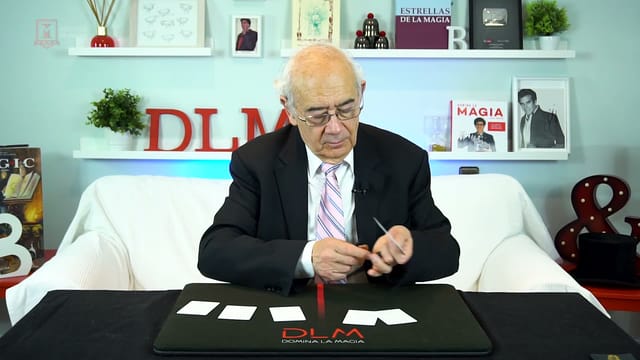
The magician shows some blank cards and uses their own name as an introduction. The signature multiplies across the rest of the cards, which can then be handed out to the spectators. Camilo Vázquez teaches this opener for a close-up session around a table.
The effect consists of multiplying what is written, not increasing the number of cards. The explanation covers packet preparation, handling, and displaying the faces, ensuring the movements look entirely casual.
Handling, Rhythm, and Naturalness
The tutorial covers material orientation, removing the cards from the pocket, dealing them onto the table, and turning the small packet over. Camilo walks through the sequence and explains how to maintain continuous action until the final reproduction.
The simplicity of the handling allows you to focus on the patter and presentation, but it requires studying the rhythm and practicing the transitions. The cards must be shown fluidly, without turning every gesture into an overly insistent check.
It also discusses how to prepare multiple sets of props to repeat the opener at different tables when handing out the signed cards.
Drawings to Organize a Show
This variation replaces the name with images of magic-related objects: dice, balls, money, cards, or top hats, among other examples. After the drawings appear, spectators can choose what kind of trick they want to see next.
The explanation shows how to tie those choices into your prepared repertoire and how to reserve an option for the finale of the session. It is a presentation and structure device; the subsequent routines with those objects are drawn from your own repertoire.
Props and Practice
You need a small packet of blank-faced cards prepared with the signatures or drawings you want to show, and a writing utensil to personalize it. You work with specially prepared faces instead of the values and suits of a standard deck. A table allows for the dealing, and a pocket keeps the props organized.
For the thematic variation, also prepare the routines that correspond to the chosen images. No advanced sleights are necessary: practice the packet orientation, the turns, and the patter until you can engage with the audience without interrupting the sequence.