Card peeks and Pacoima Solution
The peek as a card magic resource
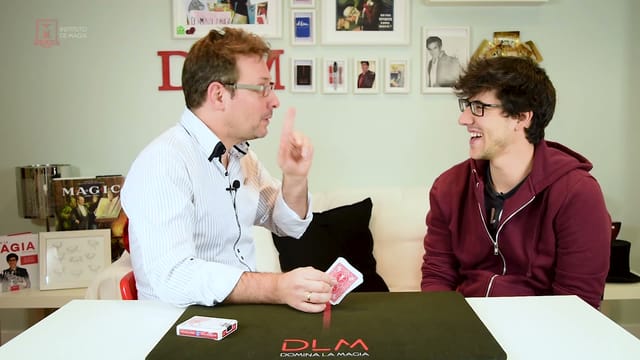
Luis Otero explores different ways to obtain information about a card without drawing attention to the observation. The lesson differentiates between peeking at the chosen card and using a peek to establish a key card to work with the selection afterward.
The explanation begins with the classic peek and two ways to weave it into a natural action. The deck position, hand coverage, maintaining a break, and the magician's viewing angles are examined. The instructor ties these details to relaxation and the ability to keep talking without rushing to look.
Peeks during a riffle shuffle and table riffle shuffle are also demonstrated, along with methods to learn the top or bottom card. The lesson wraps up this section with a recap from the magician's perspective to compare handlings and choose the most suitable one for the context.
Instructions and attention
One variation allows the spectator to open the deck to think of a card. The lesson analyzes how to explain the action, prevent them from seeing multiple cards, and give them time to remember the chosen one. The instructor emphasizes reviewing the instructions when something does not go as planned, rather than blaming the participant.
Timing is part of the technique: separating the selection moment from the peek, maintaining a relaxed attitude, and recognizing when the audience's attention allows you to proceed. It explores how conversation and handing the deck over can motivate a move without adding an action that looks like it is done solely to peek at the cards.
Pacoima Solution
This application is a routine by Larry Jennings presented as a dream. A thought-of card seems to be in one part of the deck; the search turns into a divination and ends with an appearance in the portion kept inside the card case.
Otero explains the progression and his personal handling touches. The spread, eye gaze direction, spectator confirmations, and the transition toward the invisible card presentation are all worked on. The emphasis is on keeping the audience's experience clear and setting up each verification before the climax.
You need an ordinary deck, its case, and a table. The instructor presents the routine as an impromptu option that can be performed with a borrowed deck. It helps to be comfortable with breaks, spreads, and controls; the peeks are broken down and recapped, while the routine requires integrating them with the handling and patter.