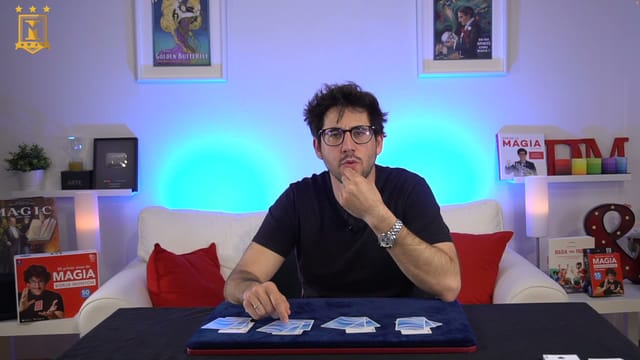
McDonald's Aces: Ace Assembly with Double-Faced Cards
The routine begins with four aces separated into four packets. Three vanish one by one and assemble with the ace that was set aside. Borja Montón presents and explains his handling of McDonald's Aces using double-faced cards, paying close attention to the setup, the displays, and the clarity of the final journey.
Setup and Packet Arrangement
The tutorial covers which specialty cards are needed, which duplicates must be removed, and how to arrange the rest of the deck. The choice of indifferent cards, the order of the aces, and the spreading action are studied in relation to the cleanliness of what the spectators perceive.
The first intro allows you to set up the packets without a complex technical switch. Borja shows how to direct the choice of the packet to be set aside and how to do it using patter and the rhythm of the count. He also suggests placing that packet under a participant's hand, separate from subsequent handlings.
Standing performance and table work are compared, as well as the orientation of the cards toward the spectators. The deck can be shown mixed; the text explains why adding unnecessary shuffles or cuts can introduce risks without improving the effect.
Three Vanishes and the Final Assembly
The first vanish uses the Elmsley count and a sequence of face and back displays. The order of actions is reviewed to reach the necessary position with few moves.
The second vanish involves a break, a double lift handling, and the Stuart Gordon turnover as one of the options. The explanation pays attention to corners, alignment, and the information shown before the vanish. A variation allows the spectator to take part in the revelation.
The third vanish aims for an appearance of minimal contact. Its mechanics are detailed, and a specific warning is given regarding angles: it must be studied from the audience's actual viewpoint. Subsequent displays reinforce that the aces are no longer in their packets.
The finale brings the aces together in the set-aside packet. The orientation of the revelation and checking the order before showing them are discussed. The lesson includes how to clear away the props and remove the specialty cards to continue with the deck.
Alternative Intro and Optional Details
A second intro allows you to show more indifferent cards before preparing the assembly packet. It incorporates a packet switch attributed to Benjamin Earl, which the instructor explains and repeats slowly. It is a more demanding option, requiring attention to angles, standing posture, timing, and eye gaze; it is not necessary to perform the initial intro.
An alternative to the second vanish's turnover is also explained. A brief handling with a special index card serves to study another display, but it requires adapting the routine's construction. It is presented as an optional detail, not as a second full routine ready to be performed from any position.
Music and Illustrated Cards
The structure allows you to establish the situation first and continue the vanishes with music. Borja discusses how he adapted the routine to Pokémon cards and suggests other recognizable images, such as soccer stickers. These are presentation and material ideas, not a full script for those shows.
For the adaptation with illustrated cards, the use of card sleeves and their effect on handling is discussed. Sleeves can change the glide and make certain counts harder, especially with wear; you must test the techniques with your specific materials. The lesson does not include custom cards, a music track, or a printable template.
Props and Practice
You need a deck, three double-faced cards appropriate for the ace assembly, and a table or surface to place the packets. The exact setup and card selection are explained in the video. Sleeves and illustrated cards are optional, as is the special index card used to discuss another display.
It is best to master the Elmsley count, breaks, and double lifts before putting the whole routine together. The application of these techniques is worked on in context. Practice the vanishes separately, check the angles, and then link the displays and the final revelation. If the alternative intro adds too much difficulty, the initial setup allows you to study the same assembly without that packet switch.