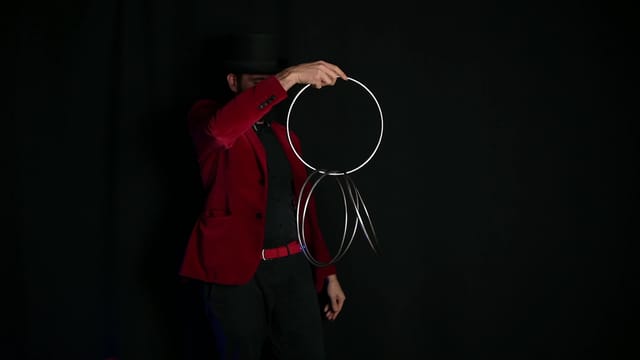
Chinese Linking Rings Routine
What Most People Get Wrong
Many performers think the linking rings are just a series of technical passes and ignore the rhythm of the performance. They focus so much on the "how" that they forget the "why," leading to a routine that feels mechanical or overly long. If you treat the rings as just a puzzle to be solved, you lose the theatrical impact that makes this a classic.
Why It Matters
When you structure your routine around what you genuinely enjoy performing, that enthusiasm translates directly to your audience. A well-paced routine doesn't just show off sleight-of-hand; it creates a visual rhythm that captures the room. By focusing on the flow—how you move between the chain of two and the four-ring chain—you turn a series of technical moves into a compelling stage performance.
What You'll Learn
This lesson covers the fundamentals of a professional linking rings routine, from selecting the right equipment to mastering the choreography. You will learn:
- Equipment Selection: How the weight and size of your rings change how they handle and how they appear to the audience.
- Routine Structure: How to build a routine that flows, including transitions between single rings, key rings, and chains of four.
- Performance Handling: Specific techniques for displays, spinning, and managing the rings during a performance.
- Theatrical Pacing: How to use silence, music, and body language to make the separation and linking of the rings look deliberate and impossible.
About the Instructor
Borja Mazorriaga is a professional magician who has spent years performing for every type of crowd, from corporate events to theater stages. His approach is rooted in the "worker" tradition: he tests everything in front of real people, refining his routines based on what actually gets a reaction rather than what looks good on paper.
What's Included
- Choosing the right ring size and weight for your act
- Techniques for the key ring display
- Handling the chain of four and the chain of two
- Transitioning between different figures for smooth flow
- Using rhythm and physical movement to mask the methods
- Adapting classic routines like those by Pepe Carroll to fit your show
Frequently Asked Questions
What if I've been doing it wrong for years?
That's part of the process. Magic is about constant refinement. If you’ve been doing the moves but the routine feels flat, focus on the performance and the transitions—not the secret moves—to breathe new life into your act.
Is this the only correct way to do it?
Not at all. There are many ways to perform this classic. The "correct" way is the one that fits your style and keeps your audience engaged.
How do I know when I'm doing it right?
When you can perform the routine while focusing on your audience and the music rather than your hands, you’re on the right track. If you can perform the moves with confidence and the audience is hooked on the effect rather than trying to figure out the method, you’re doing it right.