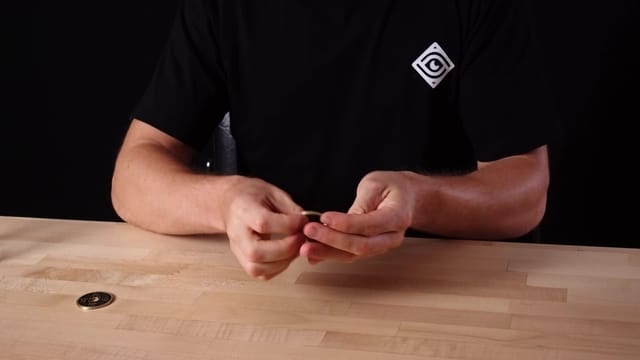
Coin Penetration Phase Two
Take Your Coin Magic to the Next Level
This lesson focuses on the "Phase Two" of a coin penetration routine. You’ll go beyond basic vanishes and learn how to manage multiple coins, perform clean transitions, and use the rhythm of your performance to make the magic feel impossible.
How It's Taught
Julio breaks this down into three distinct variations of the coin pass. He explains the mechanics of each—including the original Divernon variation, a friction-based approach, and a classic palm finish. You’ll learn exactly where to hold the coins, how to move them from finger palm to classic palm, and how to ditch coins into your lap without the audience noticing.
What Level Is This For
This is an intermediate lesson. You should be comfortable with basic finger palming and classic palming. If you already understand how to hold a coin secretly while keeping your hand looking natural, you’ll be able to pick up these sequences quickly.
About the Instructor
Julio Ribera is a seasoned street and close-up magician known for his practical approach to teaching. He doesn’t just show you the moves; he explains how to use your body, tension, and relaxation to cover the work and keep your audience focused exactly where you want them.
What's Included
- The Divernon Variation: A clean method for picking up and stacking coins.
- Friction Pass: Using the friction between coins to create a visual penetration.
- Classic Palm Finish: How to finish with empty-looking hands for a cleaner reveal.
- Lap Ditching: Techniques to secretly dispose of coins under the table.
- Tension & Relaxation: How to use the spectator's reaction as a window to perform your secret moves.
Frequently Asked Questions
How long until I can perform this?
If you have the basic palming down, you can master the sequences in a few practice sessions. The timing and misdirection will take a bit longer to refine in front of an audience.
Do I need a specific type of table?
The routine is designed for a glass table, but the concepts of misdirection and tension work on any close-up surface.
What if my hands are small?
These techniques rely on proper finger placement rather than hand size. Focus on keeping your hands relaxed and open during the "empty" moments; this will do more to convince the audience than your actual grip.
Is this easier with certain coins?
Standard half-dollars or similar sized coins work best. Avoid using coins that are too small, as they can be difficult to manage during the friction passes.