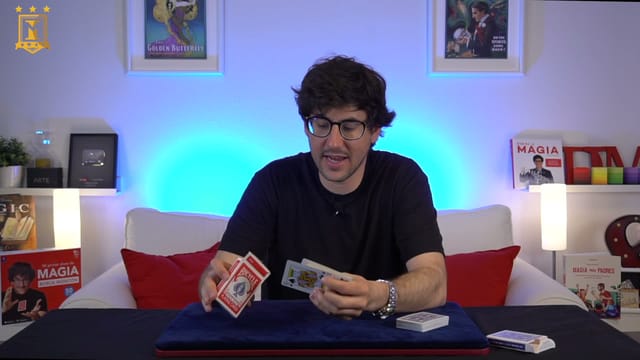
Total Coincidence by Juan Tamariz
Four Matches with Two Decks
Borja Montón breaks down Total Coincidence, the classic Juan Tamariz routine from Sonata. Two spectators take part in a sequence of shuffles, cuts, and choices that builds up to increasingly impossible matches: first a single card, then another pair, next the entire packets, and finally the cards kept inside the tuck boxes.
The video starts with a performance by Juan Tamariz as a reference. Then, Borja goes over the setup and handling of the routine, explaining why clear conditions, audience interaction, and the progression of the reveals matter just as much as the sleights.
Setup and Handling
Learn how to arrange the two decks, make sure they are complete, and handle the pre-show work without wasting time. Visual cues are also shared to help you stay on track during the handling and avoid mistakes when pulling the cards out of their tuck boxes.
The routine is taught phase by phase. You will learn how to guide the shuffles and cuts, keep control of the packets, and coordinate the two participants' choices. Glimpses, breaks, and a force at the right moment are all covered. The explanation includes how to clear the table after each match to move on to the next, and how to reach the climax without losing the thread of your presentation.
This isn't a hands-off routine that runs on autopilot with spectator shuffles. Borja points out which actions need to be guided, when you should step in, and how to adjust the shuffle if the participants aren't used to table riffle shuffles. He also stresses the importance of precision when separating and gathering the cards—small slips can mess up the whole ending.
Presentation, Pacing, and Stronger Impact
A key part of the lesson is making a long sequence easy to follow without dragging. We look at how to highlight the fair conditions, use pauses, keep the patter going during the moves, and make each match feel bigger than the last one.
Borja talks about using humor right before a reveal, building up the pacing, and the final kicker with the cards left in the boxes. He also covers the final spread on the table: the closing image should help the audience grasp and remember what just happened. Tips are given on how to adapt the presentation without trying to copy Tamariz's personal style.
Clean-up and Troubleshooting
A clean-up method is shown to make resetting the trick a breeze, along with fixes for issues like stuck cards, dropped cards, or accidental changes to the stack. As a safety net, a version of Do as I Do using a key card is briefly reviewed; it's an emergency fallback, not a full second routine taught in depth. Using a familiar stack is also suggested to spot mistakes easily, without making memorizing a full deck a must.
Props and Requirements
You need two complete 52-card decks with no jokers, featuring different colored backs and their tuck boxes, plus a table with enough room for two layouts. The routine is designed for two participants.
You should be comfortable with cuts, table shuffles, spreads, and a force. The moves aren't super knuckle-busting, but timing the phases and working the crowd take practice. Run through the sequence and clean-up first, and then work on your spectator management and the timing of the reveals.