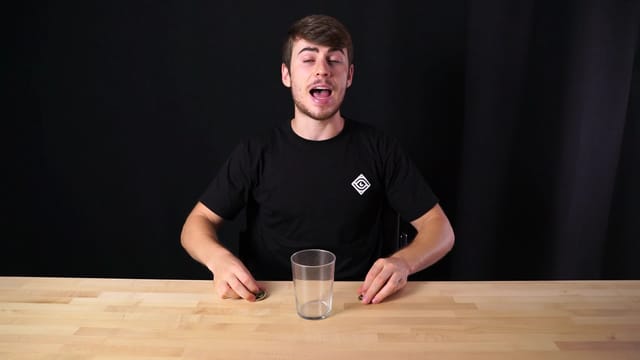
Coins Across Phase Three
The Common Trap: Over-Explaining
Many magicians spend way too much time justifying every single move in a routine. By the time they get to the final phase, the spectator is bored because they’ve seen the same explanation three times.
Why Speed Matters
When you’ve already convinced the audience that the magic is real in the first two phases, you don't need to baby them anymore. The final phase is about pace. By speeding things up, you keep the energy high and make the final vanish feel like a natural, impossible conclusion.
What You'll Learn
This lesson covers the third phase of a Coins Across routine. You’ll learn how to use a lap ditch to cleanly move a coin out of play while keeping the focus on the remaining coins.
We’ll focus on:
- The Lap Ditch: A simple way to secretly move a coin while keeping your hands looking natural.
- Managing Sound: How to open your hands just enough to create a satisfying "clink" when the coins arrive.
- Pacing the Routine: Knowing when to stop explaining and start performing to keep your audience hooked.
- Final Positioning: Getting the glass and coins into place for the last pass.
About the Instructor
Julio Ribera is a Spanish magician who specializes in making complex close-up routines accessible. He focuses on the "doing" rather than abstract theory, showing you exactly how to structure your movements so the magic happens right under the spectator’s nose.
What's Included
- The mechanics of the final lap ditch
- Timing for your presentation
- Creating clean, audible effects with coin placement
- Resetting the glass for the concluding pass
Frequently Asked Questions
Is the lap ditch always reliable?
It’s reliable if you have a table and are sitting down. The key is to make the motion a byproduct of picking up the coins from the table edge rather than a separate, suspicious movement.
What if I don't want to use a lap?
This routine relies on the lap for speed. If you are standing, you’ll need to swap this for a pocket steal or a holdout, but for close-up seated work, the lap is the cleanest way to do it.
How do I know if I'm going too fast?
If the spectator can't follow where the coins are, you’re going too fast. Use the sound of the coins to signal the change—the "clink" tells them something happened even if their eyes missed the exact moment of the move.