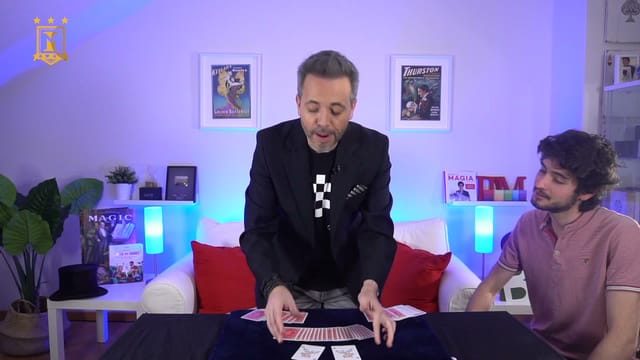
Crafting Tricks and Routines: Theory and Triple Sandwich
Crafting a trick starts with deciding what the spectator should grasp and what conditions make the effect recognizable. Miguel Ajo breaks down the relationship between what happens in plain sight and the sleight of hand that makes it possible. He then applies these criteria to a complete routine featuring a triple sandwich with two jokers.
Clarity, Method, and Cover
Defining an effect as a contrast between a starting situation and an ending one helps review what is shown and when. We look at phrasing the effect in a single sentence, emphasizing initial conditions, and pacing the instructions. The goal is for the audience to follow every phase without getting hit by all the information at once.
The choice of method is analyzed based on its connection to the effect, not just its ease. We study how to distribute the dirty work throughout the trick and the variety of resources available to avoid packing all the difficult moves into the climax.
Cover tools are explained through examples: magic square/memory lapses, continuity actions, and actions in transit. We draw a line between giving time to separate an action from its effect versus dragging out the wait so much that the initial contrast gets lost. The ideas of slow, clear execution are tied to making the spectator feel they could follow what happened, without confusing this with always working in slow motion.
Linking Multiple Effects
The masterclass explores different ways to chain routines: a shared theme, a repeating effect under changing conditions, or a specific prop. We propose structures featuring a short opener, a middle, and a closer, as well as finales that echo an idea from the start.
The patter can also build that bridge. We study recurring lines, expressions that pay off later, and shifts in how information is delivered. Progression is viewed from the spectator's angle: a phase can feel more impossible without getting harder to follow or requiring a tougher sleight.
Red herrings and closing off potential explanations tie into repetitive routines. We analyze how one effect's conditions can boost the next, and why the sum of the parts must deliver something beyond just running through several tricks back-to-back.
Internal Structure
Construction involves spreading out the method's needs across the phases and making the most of what naturally happens during the handling. We discuss the perks a trick offers when it keeps certain backs hidden, doesn't mess with the deck's stack, or lets you slip in a resource without altering its visual appearance.
Examples with other props bring these criteria to life. The hands-on work focuses on card magic: you don't need special sleeves, a topit, or trick coins to follow along.
Triple Sandwich with Two Jokers
The routine showcases three selections ending up trapped between the jokers. Each phase shifts the apparent conditions: first the whole deck comes into play, then a small packet, and finally, the two jokers seem to have nothing between them. We distinguish between an opening revelation that looks like pure skill, a magical logic approach, and an appearance framed as the materialization of a remembered card.
The explanation covers choosing and controlling the cards, a variation of the LePaul spread control, checking via a peek, and culling during a spread. We also tackle the Hofzinser pass principle in the second sandwich and timing the final reveal. It shows how the setups left by one phase pave the way for the next, and how spreading out the handling saves you from having to pull everything off in a single instant.
Presentation is analyzed alongside technique: the role of a gag, the final image summing up each effect, stating the conditions, and that magic moment right before the reveal. The target card is recalled after seeing it shuffled into the deck; the thought-of card vibe is built up throughout the routine.
Materials and Setup
For this material, you'll need a standard deck with two jokers and a table to spread the cards and place your final images. To get the most out of the theory, it's best to have a trick or a short routine of your own that you can review through these lenses.
The practical handling calls for smooth moves with breaks, overhand shuffles, spreads, and controls. Specific procedures are laid out, including alternatives like the double undercut, but we don't start from scratch with beginner grips and card magic fundamentals. Rehearse each phase, and then run through the whole sequence with its beats, pauses, and transitions.