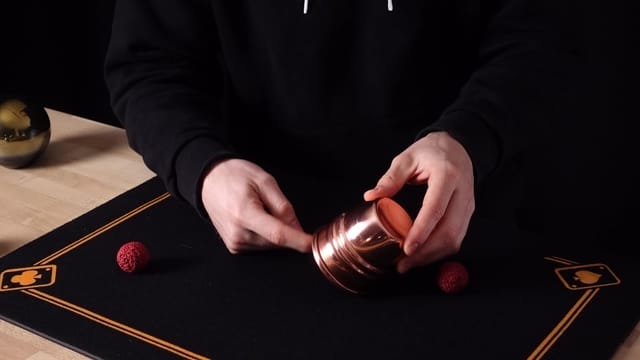
Cups and Balls Loading Techniques
How Loading Works
Loading is the secret move that lets you place a ball inside a cup while the audience thinks you are just picking up another object or showing the cup empty. Once you get the mechanics down, you can make balls appear inside the cup at will, which is the heart of a solid cups and balls routine.
How It's Taught
The teaching is broken down into two specific scenarios: loading an empty cup and adding a ball to a cup that already contains one. Julio focuses on the "natural gesture"—making sure your hand movements look like you are just grabbing an object rather than performing a technical maneuver. He provides clear, step-by-step instructions on finger placement, specifically how to use your ring and pinky fingers to hold the ball in a finger palm while your middle finger and thumb handle the cup.
What Level Is This For
This is an intermediate skill. You should be comfortable holding objects in a finger palm without feeling tense. It takes a bit of practice in front of a mirror to ensure your hand stays relaxed and the cup covers the ball naturally without looking like you’re forcing the movement.
About the Instructor
Julio Ribera is a professional magician and online educator who has spent years perfecting close-up magic. His teaching style is practical and direct—he focuses on how these moves look from the spectator's perspective so you can perform them with confidence.
What's Included
- Finger Palm Technique: How to hold the ball securely while keeping your hand relaxed on the table.
- The Pivot Load: Using your middle finger to tilt the cup and place the hidden ball inside.
- Natural Misdirection: Coordinating your movements so the cup hides the load.
- Multi-Ball Loading: How to add multiple balls into a cup that already has one inside.
- Mirror Practice Tips: How to check your angles so nothing is visible from the front.
Frequently Asked Questions
How long until I can use this?
You can learn the basic mechanics in one session, but it will take a few days of practice to make the movement look natural and effortless.
What if I have small hands?
The move relies on your finger position, not hand size. By keeping your fingers slightly tilted and closed, you can hide the ball regardless of your hand size.
Is this easier with certain balls?
It works best with standard sponge balls or soft, light balls that are easy to compress slightly when loading.
Can I learn this without a teacher watching?
Yes. Julio emphasizes using a mirror to check your angles. If you can't see the ball from the front, your audience won't see it either.