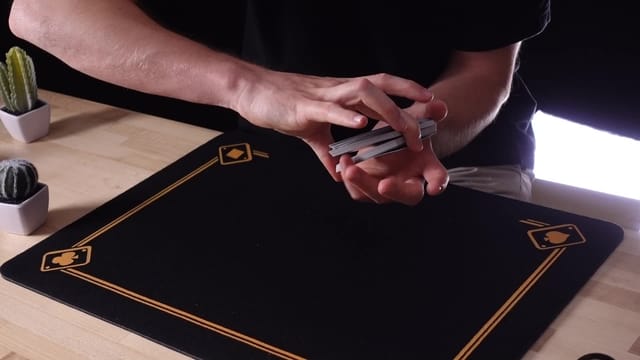
Double Undercut Control: Maintaining the Break and Controlling the Card to the Top
The Double Undercut allows you to control a card to the top after giving the appearance of losing it amidst various cuts. Julio Ribera explains the control starting from the return of the card and connects the new technique with the break and the cuts used to receive it.
Receiving the Card and Maintaining Its Position
The explanation begins with a chosen card placed on top of a packet separated via a Swing Cut. As you square the deck, you maintain the break that will allow you to recognize the necessary spot for the control.
Julio reviews this setup and shows the possibility of holding the break directly or regaining it while placing and squaring the packet. The study starts before the cuts, because keeping a good reference allows you to execute them cleanly.
Changing Grips Without Losing the Break
The next moment is the transition to Biddle Grip. The explanation covers how the reference is transferred to the thumb and how the deck is held while the other hand prepares the packets to be moved.
Attention is paid to the space the packet needs when placed on top and the squaring action between moves. It's a transition worth practicing separately so that changing your grip doesn't interrupt the control.
Performing and Linking the Two Cuts
Julio explains the first cut and the second cut made at the break, leaving the card on top. The sequence is repeated with a face-up reference card so its path can be followed, after which you return to performance tempo.
Combinations with Swing or Swivel Cuts and other cuts while maintaining the necessary reference are also shown. The lesson helps you understand the structure of the control and how to use it in a more continuous handling.
Basics and Scope
You need an ordinary deck, familiarity with Biddle Grip and Mechanics Grip, and comfort with a break and a Swing or Swivel Cut. These skills are used to set up and link the Double Undercut.
The lesson is taught by Julio Ribera. He explains this control to the top and its coordination; mentions of other positions describe the general concept of control, not a tutorial for every possible destination using a double undercut.