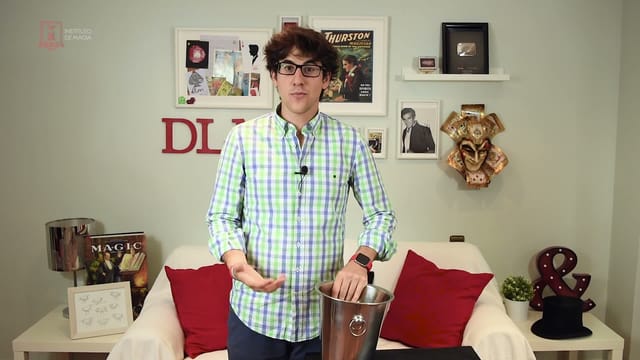
The Miser's Dream: Coins with an Ice Bucket
Coins appearing from the air and the spectator
The Miser's Dream combines coin productions with the sound of them dropping into a metal container. In the version taught by Borja Montón, a participant assists the magician and ends up becoming the center of both the magic and the comedy.
The lesson begins with an introduction and then moves on to the props, techniques, and the flow of the routine. It contextualizes the classic popularized by T. Nelson Downs and discusses different ways to perform it, ranging from a musical sequence to a spoken presentation.
Techniques and construction of the routine
The explanation covers the control of multiple coins, the drops into the ice bucket, and the coordination of both hands. It reviews the classic palm (Italian palm), finger palm, and other possible positions; it also adds productions and methods to retrieve coins during the sequence.
The moves are studied first individually and then within a complete routine. Productions from the air, from a breath, and from various parts of the participant's body are linked together, with pauses to show the coins and bring clarity to the accumulation.
Variants are offered to simplify a moment of the handling and provide an optional extension for the sequence. The goal of the practice is to coordinate gesture, sound, and gaze without losing naturalness or turning each action into an identical repetition.
Character, humor, and participation
An important part of the class deals with how to initiate the relationship with the assistant, work on pantomime, and distribute the magical and comedic moments. Stage orientation, pauses, the bow, and the finale are studied.
Adaptations for children and for a musical presentation are proposed. The instructor emphasizes respecting the participant's personal space and allowing them to react naturally, rather than forcing every posture upon them. Distances are also carefully managed during productions close to the face.
Props and rehearsal
You will need about ten manageable coins and an ice bucket or a metal container of comfortable weight and size. Half dollars are used, and two-euro coins are suggested as an alternative. Poker chips work well for practice; chocolate coins offer a children's adaptation with a different sound quality.
It is recommended to know the basic palms and practice coordination with the actual container before adding the interaction. To practice the drops with less noise, temporarily dampening the inside of the ice bucket is suggested.