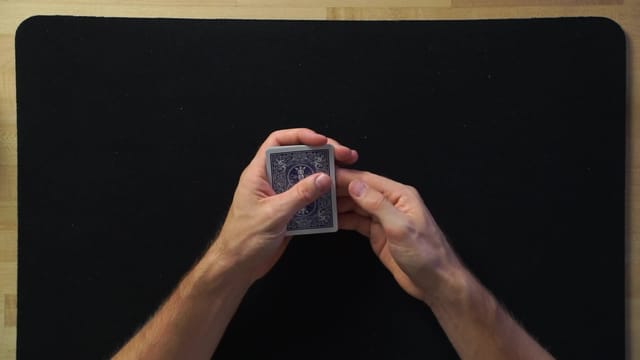
Elmsley Count: grip, rhythm, and alignment
The Elmsley count allows you to display a small packet while a card remains hidden. Julio Ribera breaks down the technique using four cards, starting with a regular count that serves as a reference to give the move naturalness.
Learning the gesture before the technique
The explanation presents the pinch grip, the finger resting positions, and working from the mechanic's grip. Before introducing the handling, Julio suggests counting the cards using that same grip and recognizing which hand moves and which one stays still. That comparison helps find continuity when practicing the technical count.
He then breaks down the coordination and repeats the movement slowly. He focuses on specific difficulties: separating more cards than intended, losing alignment when squaring a card, or moving both hands unnaturally. Pressure and support adjustments are explained within the sequence.
Practicing the complete count
The video brings the parts back together to study rhythm and closure. Julio recommends practicing the technique within an effect that uses it, although the lesson focuses on the count and its details, without developing a full additional routine.
You need four cards and practice time to coordinate pressure, movement, and alignment. The lesson teaches the grip and handling from the start; it does not require a commercial gimmick.