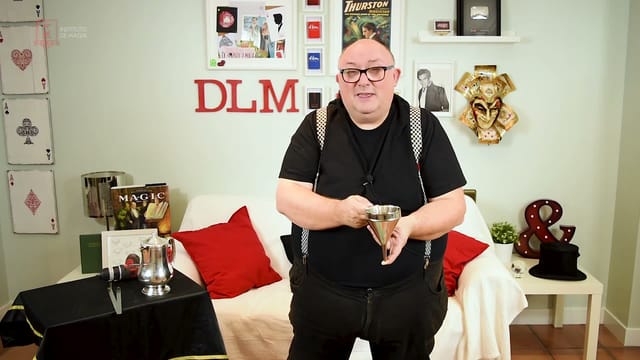
Magic Funnel
A comedy routine with a volunteer
The magic funnel routine is presented as an interactive sequence: the volunteer accepts a drink, and the magician proposes making the liquid reappear in a zany way. The routine combines patter, gag props, and liquid productions at various moments.
The class begins with a full performance, featuring an adult volunteer playing the role of the child participant. Afterward, the handling choices, audience interactions, and the pacing of each phase are analyzed.
Welcoming and directing the volunteer
Kayto explains how to choose the volunteer, introduce them to the audience, and use brief questions. He pays special attention to ensuring the child understands the upcoming actions in advance and can participate comfortably.
You will learn how to leverage laughter and applause to give subtle cues, including muting the microphone when available. Light, careful contact is also covered, emphasizing that the fun should include the participant rather than come at their expense.
Examples involving the volunteer's name, age, and responses show how to expand a conversation without losing the structure of the trick.
Construction and pacing of the gags
The sequence is reviewed from the moment the drink is handed over until the volunteer exits. The sword and drill used in the performance function as gag props, while questions and group responses shift attention between the participant and the rest of the audience.
It explains how to turn each object production into a gaming opportunity, how to adjust questions to spontaneous answers, and how to set up the liquid production moments. The class includes the closing applause and returning the drink to the participant.
Funnel handling
The preparation and control of the magic funnel are explained, comparing different sizes, grips, and models. The instructor relates the choice to comfort in use, transport, and the type of performance.
The instruction focuses on the version he uses in his routine. Other funnels from his collection are used to compare possibilities; you do not need to collect every model to follow along.
Naturalness when showing the prop, coordination between words and actions, and packing up the materials at the end are also reviewed.
Materials and practice
You need a magic funnel prepared for this effect, liquid, a container to catch it, and a drink for the volunteer. The performance shown adds the sword and drill gag props. Water and other drinks are suggested as alternatives so the participant can choose.
The main challenge lies in coordinating the handling with your patter and directing the volunteer. Rehearse the complete sequence and its transitions; Kayto encourages you to adapt the gags to your own personality and the audience's real reactions.