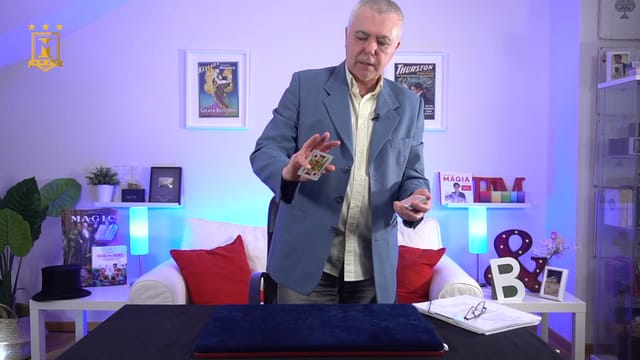
Card Palm: Naturalness and Card to Pocket
Learning the palm doesn't stop when the card reaches your hand—you also have to hold it while talking and performing. Miguel Gómez builds this masterclass around that very challenge, suggesting a progressive approach to keep things looking completely natural. The technique is applied to a card to pocket routine, first shown in performance and then thoroughly broken down.
Finding a Comfortable Position
The classic palm position and how to adapt it to your hand size are covered here. Miguel distinguishes between the points that actually hold the card and the fingers that merely cover it. The goal is to avoid a stiff hand and let the rest of your body keep communicating with the spectator.
Practive is designed for both hands, although the routine uses the right. As an opening exercise, he suggests working with a few old cards of the same size as your usual deck. The explanation uses four cards as a reference to get used to the grip before reducing the effort needed when working with just one.
Practicing While Doing Something Else
Training includes holding the cards during relaxed activities, chatting with trusted friends, and picking up everyday objects. The aim is to shift your attention away from your hand and onto what you're actually doing, without turning the practice into a tense display of stiff fingers.
To bridge the gap into performance, Miguel suggests an exercise where the trick's success doesn't depend on the palm: holding a card during a brief part of your patter and then ditching it while picking up another prop. He also shares a verbal out or a joke card to calmly handle any potential audience heat. This builds confidence step-by-step before relying on a palm to pull off an effect.
Naturalness and Attention
The explanation connects the palm to Ascanio's distinction between false and hidden actions. A false shuffle has a visible action that justifies it; a hidden card in the palm demands special care regarding attitude, gesture, and conversational flow.
The thumb position, side cover, and the difference between a relaxed hand and a deliberately open hand are all examined. Miguel discusses both static and dynamic naturalness: how the hand rests, how it drops, and how it takes part in ordinary actions. The teaching pairs posture with the functional use of the hand for picking things up, pointing, or accompanying your patter.
The Card to Pocket
The participant shuffles the deck, verifies that the pocket is empty, and remembers a card from several shown to them, along with its position. The magician seems to place a card in their pocket before knowing that information. A later check reveals that the selection is gone from where it should be and has shown up in the pocket.
Miguel attributes this structure to Nelson Downs and explains his own presentation and handling details. He covers selecting from the shown cards, keeping the stack in order, the principle used to locate the chosen card, and the checking sequence. The patter about putting the audience "in your pocket" gives a solid motivation to the effect and the spectator's involvement.
The technical breakdown covers palming a single card as you approach the pocket, the add-on onto the deck, and the top palm which Miguel presents as a Vernon handling. Every action is tied to cover and a specific moment: a gesture, a question, squaring up a messy packet, or a check made by the spectator.
He stresses separating your actions and keeping natural pauses. The final load recalls a gesture used at the beginning to show the pocket, while questions help steer the audience's attention during the sleights. The study includes the path of the hands and how to avoid letting any rush to get rid of a card make your actions look suspicious.
Materials and Preparation
You'll need a deck of cards and an empty pocket you can comfortably reach. Options for both jackets and trousers are discussed. Several old cards the same size as your regular ones work great for the exercises; blank cards are also suggested as a practice option.
The palm position is taught right from the start. You'll want to feel comfortable holding, spreading, counting, and squaring cards. Before linking the routine together, work on your grip comfort, the add-on, and transitions to the pocket, all while maintaining the patter and rhythm of a real performance.