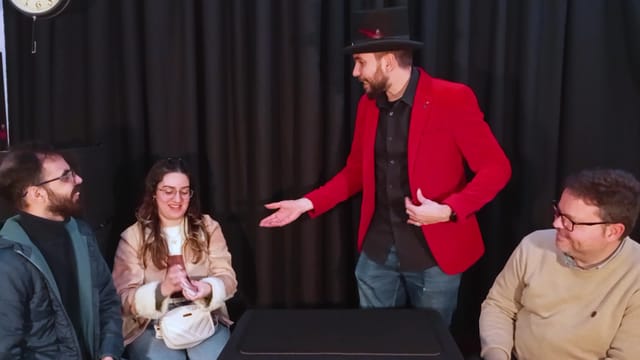
I Can See It in Your Face: An Opening Routine with a Card Transformation
A card is selected and lost; the magician appears to recognize it through the participant's reactions and ultimately transforms a card held by another spectator. Borja Mazorriaga showcases his opening routine, I Can See It in Your Face, and, alongside Julio Ribera, breaks down the technique and interaction that sustain it.
Approaching a Group and Generating Participation
The explanation starts with the presentation: asking for names, handing the deck out for a shuffle, and building a rapport with the participants. Borja connects the clarity of the effect and the performer's personality with the goal of breaking the ice. His jokes are offered as examples of his personal style; he encourages adapting the patter to fit your own.
Practicing the Force with a Built-In Out
The classic force is one of the primary tools used. The lesson discusses how to practice it using a physical reference point before performing it live, and why this routine offers a great way to practice it without relying on a 100% success rate.
If the spectator takes a different card, the explanation details a continuation involving a control and a peek. It explores how to maintain the same narrative and keep a relaxed demeanor while waiting for the right moment to execute the sleight. The questions asked and the use of eye contact are tied directly to this management of audience attention.
Controlling the Selection and Setting Up the Change
The lesson covers using a cull to recover the known card after it has been lost and shuffled into the deck. Borja reviews the cover, the location, and the timing for looking up so the move can be executed without staring down at your hands. He also offers an alternative using a cut for those who haven't yet mastered that control.
The tutorial covers getting a pinky break under three cards, comparing a one-handed handling with a two-handed approach. The triple lift connects the setup to the card received by the spectator.
Giving Meaning to the Two Revelations
The divination is framed as reading body language within the context of the routine's narrative; the method explained does not rely on any real ability to read cards in someone's face. Borja examines how to improvise patter based on the cards that appear and how to give the final change its own distinct moment in the spotlight.
You will need a regular deck of cards. It is recommended to practice controls, breaks, and triple lifts; the lesson reviews their usage and offers alternatives to build a version suited to your current skill level. It includes a live performance with participants and an in-depth explanation of the choices behind the technique.