History of Magic in the 20th Century: Houdini, Vernon, and New Audiences
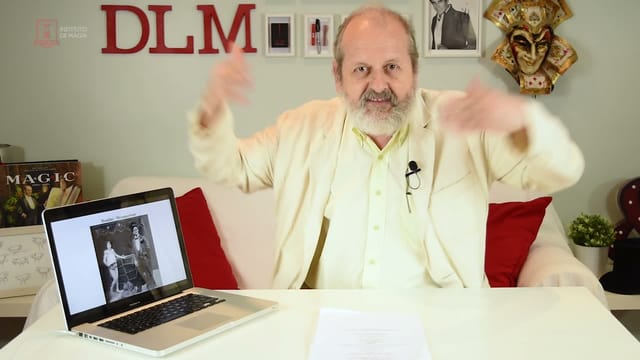
This lecture offers an interpretation of the evolution of magic from the large-scale theatrical companies of the late 19th century to the diverse formats of the 20th and early 21st centuries. Ramón Mayrata uses two figures as the main axes of the journey: Harry Houdini, associated with mass entertainment, and Dai Vernon, linked to the development of close-up magic. From these figures, he connects artists, performance venues, audiences, and the media.
The value of this journey lies in understanding why magic changes when the world around it changes. Biographical anecdotes, references to performances, and comparisons with other arts form part of the historical interpretation presented by the speaker.
The Large Companies and the Arrival of Cinema
Mayrata begins with the splendor of large-format theatrical shows: large casts, international tours, and wondrous narratives built through large illusions. He explains the function he attributes to this magic in a society marked by rationalism: giving the audience back an experience of mystery and wonder.
Cinema appears first as an ingredient of these shows and later as a competitor with other production possibilities. Georges Méliès serves to study the relationship between magic, cinematic fiction, and handcraft. The comparison with industrial production, with references to Pathé and Segundo de Chomón, helps to understand how a new way of creating and distributing images transforms the entertainment environment.
Erdnase and the Artistic Use of Technique
The lecture introduces The Expert at the Card Table and the hypotheses surrounding the identity of S. W. Erdnase. Mayrata presents these hypotheses as possibilities, not as a definitively resolved identity.
The book connects with the figure of Dai Vernon and with a question that reappears at the end: the exact same techniques can be used to cheat in a card game or to produce an artistic experience. The object of the analysis is this shift in intention and meaning; the teaching of the card sharp techniques described in the work is not developed.
Risk, Identity, and Show Organization
The stories about The Great Lafayette and Chung Ling Soo introduce the relationship between character, illusion, and reality. Mayrata discusses their shows and tragic episodes to reflect on the power of a stage identity and the presence of danger in the era's imagination.
The Sawing a Woman in Half illusion and the versions associated with Horace Goldin are then used to discuss authorship, branding, and the repetition of the same show by different companies. The speaker connects this model with the shift from a production tied to an individual personality toward forms of industrial organization.
These cases are studied as episodes in the historical narrative and as examples of their effects on the audience. They do not constitute instructions for reproducing danger acts.
Houdini: Freedom, Publicity, and Mass Entertainment
The journey through Houdini addresses his training in traveling circuits, his beginnings with cards, and the importance of Bess in his career. Mayrata explains how the escape comes to occupy the center of the show and how the street, publicity, the artist's body, and the crowd modify its presentation.
Shackles and escapes are interpreted as images of freedom, especially significant for an audience that the speaker connects with the immigrant experience and the limitations of everyday life. The comparison with Futurism helps to situate this proposal within a sensitivity of speed, sports, and the transformation of urban space.
Another block deals with spiritualism, the relationship with Conan Doyle, and Houdini's campaign against fraudulent mediums. The conversion of an investigation and denunciation into entertainment is analyzed. The cited séances and phenomena are described to understand the conflict between belief, demonstration, and illusionism, without affirming supernatural abilities or teaching a mentalism act.
The Character of the Manipulator and Close-up Magic
Cardini and Frakson allow us to study how a performer can make magic seem to happen to them. Mayrata discusses Cardini's character and his surprise at the marvels, and relates Frakson's expression to the perception of seemingly spontaneous apparitions. The central reflection is how to prevent sleight of hand from being the sole explanation for what the audience beholds.
Vernon's figure returns through the story of his meeting with Houdini and an ambitious card. From this contrast, a different performance sphere is addressed: proximity, small groups, and the experience of seeing the effect up close. The Magic Castle, societies, books, and lectures appear as spaces for gathering, study, and transmission.
Wars, New Venues, and the Media
The speaker connects economic crises, wars, and totalitalism with changes in the entertainment world. He introduces cases like Hanussen, Kalanag, and Nirvelli, and returns to Frakson to discuss displacements and professional adaptation. The analysis connects the reduction of certain theatrical circuits with work in circuses, hotels, clubs, and music halls.
References to Channing Pollock and Orson Welles broaden the reflection on duration, audience, and stage language. Afterward, the Piddington duo and ventriloquism serve as examples of shows that take advantage of radio. Television presents another shift: at first, it receives acts conceived for other spaces, but later it develops its own resources.
Juan Tamariz appears as an example of a presentation that gives importance to the witnesses present in the studio to transmit emotion to the home viewer. The comparison allows us to consider what is preserved of an effect and what needs to transform when the medium changes.
Perception, Art, and Contemporary Challenges
The final part returns to close-up magic and highlights the contribution that Mayrata attributes to Ascanio and the Madrid School of Magic. A conception of magic as an art that works with human perception, beyond the execution of the procedure, is discussed.
The conclusion brings together the coexistence of large-scale shows, close-up magic, and television formats, the role of societies in transmitting the secret, and the challenges of virtual reality and an audience accustomed to extraordinary images. A reference to William Kentridge links magic and artistic creation with the possibility of imagining other realities.
Materials and Prior Knowledge
No decks of cards, coins, or props are needed to follow this lecture. It may be useful to take notes on the artists, works, and format changes discussed, but no prior reading is required, nor are external books, films, or documents announced as included materials.
It requires no manual dexterity or technical knowledge of the mentioned tricks. It is a historical and theoretical lecture, accessible to anyone who wants to place different forms of illusionism in context. The effects are described to analyze their presentation and meaning; their performance is not part of the practical instruction.