Magic Institute Lectures
28 lectures on repertoire, technique, creation, and presentation: card magic, coin magic, sponge balls, mentalism, children's magic, and stage performance. Includes rehearsal, audience management, lighting, sound, and show production, with specific requirements for each lesson.
Magic Institute Lectures
28 lectures on repertoire, technique, creation, and presentation: card magic, coin magic, sponge balls, mentalism, children's magic, and stage performance. Includes rehearsal, audience management, lighting, sound, and show production, with specific requirements for each lesson.

28 Lessons
Coin magic: technique, rehearsal, and presentation
Presentation and Fictional Magic: The Biddle Trick and the Gypsy Thread

Creativity and presentation in mentalism and card magic

Creating a Theatrical Magic Act
Lighting and Sound for Magic Shows
Preparación, estructura y venta de espectáculos de magia
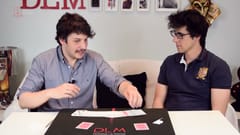
Presentation in card magic: premise, patter, and audience participation
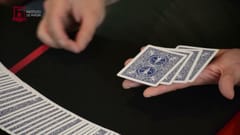
Ascanio's Theory and Card Magic: Imaginary Dice, Collectors, and Ace Transposition

Fundamentals of mentalism: presentation, preshow and pendulum
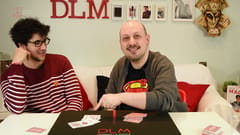
Mathematical Card Magic: Thought-of Card, Poker, and Si Stebbins

Children's Magic and Clown: Humor and Audience Participation

Escape Magic: Padlocks, Handcuffs, and Stage Performance
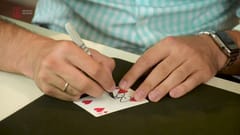
Card magic: thought-of cards, naturalness, and torn and restored card

Magia de salón: botella y copa, aros chinos y billete en el pan

Coin and Glass Magic: The Catapult and Selective Drop

Stage Card Manipulation: Preparation, Technique, and Loads

Double Lift: Preparation, Turnovers, Handling, and Applications
Sponges: Always Three, Ghost Balls, and Color Transposition
Card magic: Joker sandwich, prediction, and all backs
Four card magic routines and comedy principles
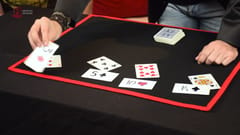
Garlic Aces, progressive ace location, and Quadruple Prediction

Hand Training, Improvisation, and Estimation in Card Magic
Technical Preparation of a Magic Show

History of Magic in the 20th Century: Houdini, Vernon, and New Audiences
Street Magic: Gathering Crowds, Audience Management, and Passing the Hat
Black Card in Card Magic: Cover, Construction, and Routines

Stage Pickpocketing: Attention, Technique and Routine Construction

Act Creation, Rehearsal, and Manipulation Technique
This collection brings together 28 lectures from the Magic Institute on repertoire, technique, creation, and performing for an audience. Each instructor develops their own approach through explanations, demonstrations, or exercises. You can follow the selection in the suggested order or jump to a specific lecture depending on the skill or problem you want to work on.
Building Routines and Expanding Resources
Card magic makes up a significant part of the collection. You will find a study of the double lift with Rafael Benatar; applications of Ascanio's theory with Hugo Maximiliano; mathematical card magic with Woody Aragón; and work on construction, naturalness, and attention with Dani Daortiz, Víctor Piña, Luis Otero, and Miguel Ajo. Ricardo Sánchez and Daniel Collado connect their routines with premise, creativity, and audience participation.
Think Nguyen proposes hand preparation, improvisation, and estimation. Luis Olmedo studies the blank-facer card and its presentation conditions. The profiles distinguish the techniques that are taught from those used as prerequisites, so you can choose a starting point suited to your experience.
The selection also includes coin magic with Agustín Leal and Miguel Ángel Gea, sponge balls with Xulio Merino, parlor magic with Camilo Vázquez, and stage card manipulation with G. Alexander. These are opportunities to compare how phases are structured, props are prepared, and clarity is brought to effects of different natures.
Presentation, Character, and Audience Relationship
Juanma González works on fiction and the meaning of a presentation; Adolfo Andrés develops the theme, character, story, and body expression of an act. Miguel Muñoz tackles creation through exploration and rehearsal with concrete objectives. These lectures help translate an idea into observable decisions regarding pacing, movement, and composition.
Other modules focus on specific performance situations: Adolfo Masyebra studies presentation and audience participation in mentalism; Kayto applies humor and clowning to children's magic; Raúl Camagüey analyzes how to gather and keep an audience on the street. Vituco covers escapology and Héctor Mancha covers stage pickpocketing, along with their respective requirements and performance contexts.
Preparing the Show and Its Production
Borja Montón's lectures cover the organization of a performance, its transitions, prop preparation, and the professional presentation of the show. His technical session covers scripting, cueing, running order, stage management, audio, microphone use, and team communication, alongside a sample dossier.
Iván Santacruz delves into lighting and sound through spotlights, positions, sound checks, and technical riders. Both approaches allow you to connect artistic decisions with the actual conditions of a venue and prepare useful information for those assisting with the show.
Ramón Mayrata's historical perspective provides another context: the evolution of magic shows, their audiences, and their dissemination media through figures like Houdini and Dai Vernon.
Choosing What to Study and How to Practice
The level varies across lectures: some introduce concepts of creation or presentation; others require prior handling of cards, coins, or other props. Check the materials and requirements for each lesson before practicing. A single deck of cards is not enough for the entire collection, and you do not need to acquire all the mentioned objects or equipment in advance.
Alternate technical study with writing, rehearsal, and observation of your own presentation. You can work first on a specific routine or document and later return to the principles of construction and communication that support it. The instructors' examples offer different paths to develop a repertoire and a personal style of performance.
This collection brings together 28 lectures from the Magic Institute on repertoire, technique, creation, and performing for an audience. Each instructor develops their own approach through explanations, demonstrations, or exercises. You can follow the selection in the suggested order or jump to a specific lecture depending on the skill or problem you want to work on.
Building Routines and Expanding Resources
Card magic makes up a significant part of the collection. You will find a study of the double lift with Rafael Benatar; applications of Ascanio's theory with Hugo Maximiliano; mathematical card magic with Woody Aragón; and work on construction, naturalness, and attention with Dani Daortiz, Víctor Piña, Luis Otero, and Miguel Ajo. Ricardo Sánchez and Daniel Collado connect their routines with premise, creativity, and audience participation.
Think Nguyen proposes hand preparation, improvisation, and estimation. Luis Olmedo studies the blank-facer card and its presentation conditions. The profiles distinguish the techniques that are taught from those used as prerequisites, so you can choose a starting point suited to your experience.
The selection also includes coin magic with Agustín Leal and Miguel Ángel Gea, sponge balls with Xulio Merino, parlor magic with Camilo Vázquez, and stage card manipulation with G. Alexander. These are opportunities to compare how phases are structured, props are prepared, and clarity is brought to effects of different natures.
Presentation, Character, and Audience Relationship
Juanma González works on fiction and the meaning of a presentation; Adolfo Andrés develops the theme, character, story, and body expression of an act. Miguel Muñoz tackles creation through exploration and rehearsal with concrete objectives. These lectures help translate an idea into observable decisions regarding pacing, movement, and composition.
Other modules focus on specific performance situations: Adolfo Masyebra studies presentation and audience participation in mentalism; Kayto applies humor and clowning to children's magic; Raúl Camagüey analyzes how to gather and keep an audience on the street. Vituco covers escapology and Héctor Mancha covers stage pickpocketing, along with their respective requirements and performance contexts.
Preparing the Show and Its Production
Borja Montón's lectures cover the organization of a performance, its transitions, prop preparation, and the professional presentation of the show. His technical session covers scripting, cueing, running order, stage management, audio, microphone use, and team communication, alongside a sample dossier.
Iván Santacruz delves into lighting and sound through spotlights, positions, sound checks, and technical riders. Both approaches allow you to connect artistic decisions with the actual conditions of a venue and prepare useful information for those assisting with the show.
Ramón Mayrata's historical perspective provides another context: the evolution of magic shows, their audiences, and their dissemination media through figures like Houdini and Dai Vernon.
Choosing What to Study and How to Practice
The level varies across lectures: some introduce concepts of creation or presentation; others require prior handling of cards, coins, or other props. Check the materials and requirements for each lesson before practicing. A single deck of cards is not enough for the entire collection, and you do not need to acquire all the mentioned objects or equipment in advance.
Alternate technical study with writing, rehearsal, and observation of your own presentation. You can work first on a specific routine or document and later return to the principles of construction and communication that support it. The instructors' examples offer different paths to develop a repertoire and a personal style of performance.