Escape Magic: Padlocks, Handcuffs, and Stage Performance
Tools and Presentation for Escape Magic
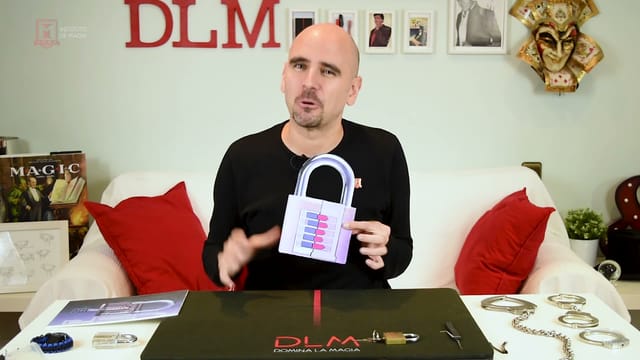
Vituco explains technical resources for working with padlocks and handcuffs, followed by a conversation with Borja Montón on how to turn those skills into an escape magic act. The lecture combines mechanism explanations, tabletop demonstrations, the making of simple tools, and a release with handcuffs applied.
Learning begins by understanding the material and developing a sense of touch when handling it. The final section focuses on the audience's experience: what they need to understand about the challenge, the emotion sought, and how to build a presentation that makes sense within the show.
Lockpicks, Tension Wrenches, and Padlock Mechanics
The first part presents different types of lockpicks and the function of the tension wrench. Vituco compares formats, sizes, and handling comfort, without suggesting that it is necessary to acquire all the equipment shown on the table.
Using drawings, enlarged models, and transparent padlocks, he explains the relationship between the key, the pins, and the opening mechanism. Building on that foundation, he develops individual pin manipulation and discusses raking as another technique, noting differences in control and results.
Special attention is paid to finding a comfortable posture, regulating pressure, and recognizing tactile and auditory feedback. Common beginner mistakes are also analyzed, along with binding caused by improper handling and the need to stop and resume practice when concentration is lost. The demonstration allows viewers to observe openings and handle repetitions, rather than just a verbal description of the procedure.
The transparent padlock is suggested as an aid to understanding the mechanism. Afterward, working with opaque practice padlocks helps develop sensitivity without relying on sight. References to home or car locks are general; no specific training on all those systems is offered.
Homemade Tools and the Limits of Each Resource
Vituco shows how to prepare simple tools using everyday materials and compares those solutions to commercial props. There is a fabrication explanation for getting started with handling and another dedicated to small opening shims for compatible padlocks.
The class includes testing and adjusting the equipment. A prop made during recording fails to properly reach the mechanism of the chosen padlock: the problem is discussed, and the lesson continues with another tool. This example demonstrates that dimensions, fit, and compatibility matter; it is not promised that any tool will open any padlock.
Homemade resources are presented as a possibility for practice, not as universal equivalents to a professional lockpick set. The demonstration also draws attention to caution when working with metal edges.
Handcuffs and Release Demonstration
Several models of handcuffs are compared, including wrist, thumb, and ankle examples, and a transparent model is used to explain the mechanism. Practical work focuses on the type of handcuffs shown: operation, safety locking, orientation, and handling possibilities.
The explanation distinguishes ordinary hardware, handcuffs prepared for illusionism, and auxiliary props. It examines how to organize these resources within a presentation and why it is best not to depend on a single method of release. Performance capabilities correspond to the models examined; universal compatibility between keys, accessories, and handcuffs is not established.
After the tabletop demonstrations, Borja helps apply the handcuffs, and Vituco performs the release. Differences between working comfortably with the object in hand versus doing so with restricted movement are discussed. Adapting to one's own materials and body positioning is part of that practice.
Building the Challenge and Dramatic Tension
The final conversation explores the presentation of escape magic: clearly explaining what is going to be attempted, justifying the conditions, and getting the audience invested in the outcome. It analyzes the value of showing the props, involving spectators, and establishing an understandable level of difficulty, rather than adding elements without dramatic intent.
Timing, expectation, the feeling of effort, and the relief of the climax are also studied. Comic escapes and tension-driven presentations are compared, along with how to decide their placement within a show. The choice depends on the desired emotion and the weight of the act within the overall program.
Vituco shares personal experiences from performances at heights, underwater, and in a straitjacket. He discusses preparation, adaptation to unfamiliar conditions, and contingency planning for failures. These are stories and working criteria: complete rigging, training, or rescue protocols to reproduce those stunts are not taught, nor is a full straitjacket routine. This recording does not replace the specific professional preparation required for high-risk escapes.
Materials and Prior Preparation
To follow the technical section, you will need your own practice padlocks, appropriate lockpicks, and tension wrenches. A transparent padlock helps understand how it works, but it is not presented as essential for all learning. The handcuff section requires appropriate practice equipment and its keys; prepared models and specialized props are alternative options depending on the demonstration you wish to study.
The fabrication shown uses small metal items, paperclips, a pen barrel insert, pliers, scissors, and protective tape. All physical materials must be obtained separately. The transparent models and commercial props appearing in the recording are not included, and no blueprints or downloadable documents are promised.
Prior knowledge of lockpicking is not required to understand the explanation: the mechanisms are introduced from the beginning. It does require patience, repetition, and familiarity with the material before integrating it into a performance. The practice described is intended for use with your own or expressly authorized objects within the context of illusionism; the risk experiences discussed are not exercises to be repeated based on this video.