Introduction to cardistry and material selection
Choosing material according to the move
The deck is the main tool of cardistry, but its condition and the way it is grouped change the practice experience. Julio Ribera brings together an introduction to the discipline and an explanation of material options, ranging from the cards you already have to packets prepared for rehearsal.
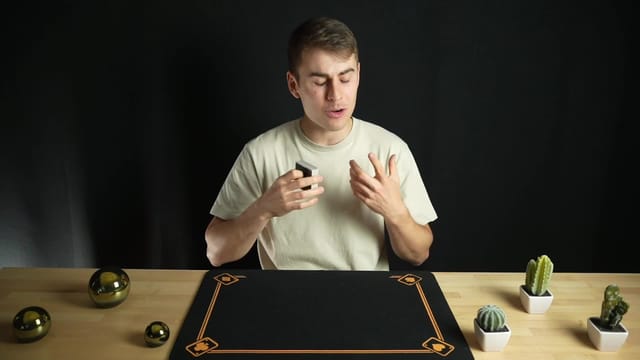
The presentation places cardistry as an activity of visual expression and manipulation. The equipment video develops criteria for choosing material based on the type of work you want to perform.
New cards, worn cards, and glide
Julio compares the needs of packet cuts with those of moves that require cards to glide or interlace. A worn deck can make it easier for a packet to stay together; other moves rely more on glide and the condition of the cards.
Various decks appear in the video as examples to discuss finish, flexibility, and handling. The focus is on understanding what properties are being sought and why the same option might feel more comfortable for one handling than another.
What trainers provide
Trainers bring together cards or pieces into small packets to concentrate practice on finger placement and the path of the move. The explanation compares the resin, acrylic, and wood models shown, paying attention to weight, rigidity, and ease of separating the packets.
Julio also presents Cardistry Planks as another flexible material option. He examines how the behavior of the pieces influences the practice of cuts and packet moves.
Card-made alternatives
The lesson includes examples of homemade trainers prepared with worn cards, adhesive tape, or glue. Different packet sizes are shown, along with a combination that keeps a few cards loose for other moves.
These examples allow you to study the path of the move and easily reassemble a packet when it is dropped or loses its position.
Material to get started
You can start with a standard deck you have at home. If you want to replicate the homemade alternatives, you will need worn cards and the corresponding bonding material. Trainers and Cardistry Planks are presented as options for working with packets; the choice depends on the move and how you prefer to practice.