Cardistry fundamentals

Four lessons by Julio Ribera to start working with the deck: choice of material, Mechanics, Straddle, and Biddle grips, Z-Grip, and dribble. Eight videos with explanations, practice options, and variants to expand your foundation.
Cardistry fundamentals
Four lessons by Julio Ribera to start working with the deck: choice of material, Mechanics, Straddle, and Biddle grips, Z-Grip, and dribble. Eight videos with explanations, practice options, and variants to expand your foundation.
4 Lessons
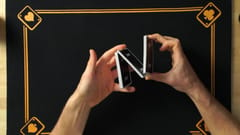
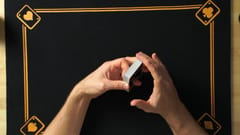
A primary foundation for handling the deck
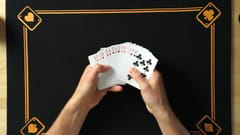
This learning path by Julio Ribera brings together four lessons and eight videos on material, grip positions, and an initial card fall flourish. The journey allows you to study how the deck is held, how packets are separated, and how the flow of cards between the hands is controlled.
The introduction presents cardistry as a discipline of visual manipulation and expression. The explanations focus on concrete tools to begin practicing.
Choosing the material
The first block compares decks and training materials. You will study the relationship between the condition of the cards, slip, and packet cohesion, as well as the weight, flexibility, and separation of the trainer models shown by the instructor.
Homemade alternatives using worn cards are included, and Cardistry Planks is presented as an additional option. You can start with a standard deck and later assess which material is useful for the type of flourish you practice.
Placing and changing grips
The second lesson establishes the orientation used in the explanations: deck in the left hand and right hand as the supporting hand. Julio covers Mechanics or Dealer's Grip, normal and elevated Straddle, and Biddle Grip.
The work focuses on the fingertips, the clearance from the palm, and the lateral placement that allows packets to be opened. Transitions between positions are also practiced.
Forming the Z
Next, elevated Straddle and Biddle are combined to create the Z-Grip. The explanation studies the opening, support, and finger spacing, adding the double variant as a more advanced expansion.
This is a block of starting positions: you can solidify the basic form and its recovery before adding the new opening.
Learning the dribble
The final lesson develops the progressive fall of the cards from one hand to the other. Release, pressure, and catch are worked on, paying attention to cards that jam or fall in small groups.
The video includes a basic version and an introduction to an advanced grip. Coordination and control of the distance between the hands organize the practice.
What you need
You will need a standard deck. Trainers, including those you can prepare with worn cards, are an optional aid for studying packet flourishes. For the dribble, you will use loose cards that can fall one by one.
You can start with these explanations of material and grips, practice their changes, and then apply that foundation to the Z-Grip and the dribble. Each lesson specifies the positions and variants being worked on.