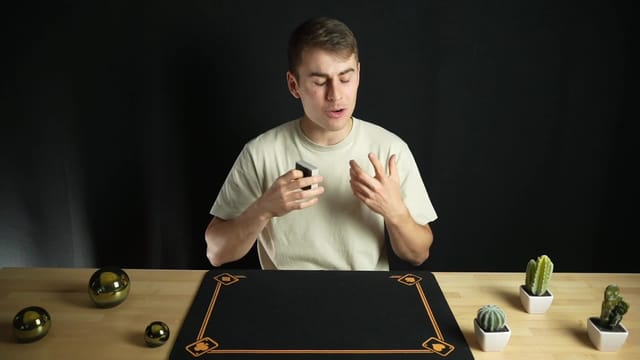
Introduction & Equipment
Stop Dropping Your Cards and Start Learning Cardistry
You’re trying to learn a new flourish, but the cards keep sliding out of your hands and hitting the floor. You spend more time bending over to pick them up than actually practicing. It’s frustrating, and it makes you want to put the deck away.
How the Right Deck Makes Learning Easier
Cardistry looks like magic, but it’s really about how you handle the tools in your hands. Most beginners think they need a brand-new, expensive deck to get started. The truth is, a brand-new deck is often too slippery for a beginner. This lesson shows you why your old, "sticky" cards might actually be your best friend for learning difficult moves.
What You’ll Learn About Cardistry Gear
You’ll learn how to look at a deck of cards like a pro. Julio breaks down which brands help you with specific moves, like spreads or shuffles, and which ones you should avoid. You'll also learn the secret of "poop decks"—those worn-out, grimy decks that actually help your cards stay together when you're practicing packet cuts.
The best part of this lesson is learning how to make your own "trainers." By using a little bit of tape and some old cards, you can create practice blocks. These let you focus on where your fingers go without worrying about twenty cards flying across the room every time you make a mistake. It's the fastest way to build muscle memory.
About Julio Ribera
Julio Ribera has taught over a million people how to handle cards through his videos and school. He’s the founder of Juggler Cards and has spent years testing every type of deck imaginable to find what actually works for students.
What’s Included
- Why cardistry makes your regular magic moves feel much easier
- How to choose between standard, resin, and wooden decks
- The "poop deck" secret for mastering packet moves
- How to make your own practice trainers using tape and old cards
- Which brands, like Tally-Ho or Bicycle, work best for different moves
- Why you should start with the deck you already have at home
Frequently Asked Questions
Do I need to buy a fancy deck right now?
No. Julio actually recommends starting with whatever deck you have at home. You can upgrade once you know what style of cardistry you like best.
What are practice trainers?
They are small packets of cards taped together. They act like a single thick card, so you can practice the "mechanics" of a move without the deck falling apart.
Is cardistry harder to learn than magic?
It takes some physical practice, but it builds finger strength. Once you get the basics down, you'll find that difficult card magic moves feel much simpler.
Will this work if I have small hands?
Yes. Choosing the right deck and using trainers makes it much easier for people with any hand size to get a solid grip on the cards.