The Dribble
Why Your Dribble Clumps
Most people try to dribble cards by just relaxing their grip, but the cards fall in big, awkward chunks. They get stuck on your front fingers because your hand stays too stiff while the cards try to pass.
Making the Cascade Smooth
When you fix your finger movement, the cards fall one by one in a steady stream. It looks professional and sounds great. Instead of a messy drop, you get a fluid cascade that makes you look like you've handled cards for years. It’s one of those moves that feels just as good to do as it looks to watch.
How to Control the Release
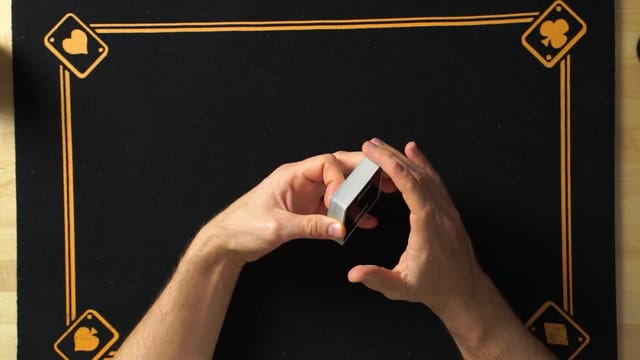
You’ll learn exactly where to place your fingers to get the best control. Julio shows you how to hold the deck by the corners using your middle finger, ring finger, and thumb. The secret isn't just letting go—it's using your index finger to push down while your thumb "riffles" the cards off the edge.
The most important part is the "wave" motion. You'll learn how to slowly open your top fingers as the cards fall so they don't get in the way. Once you get the basic version down, Julio teaches an advanced grip that lets you separate your hands further for a more impressive look. You'll go from dropping clumps of cards to a smooth, controlled flow in just a few practice sessions.
About Julio Ribera
Julio Ribera has taught millions of people magic through his popular YouTube channel and Magigram school. He is known for breaking down difficult cardistry moves into simple steps that anyone can follow.
What's Included
- The corner-to-corner grip for maximum control
- How to use your index finger to create the "riffle" pressure
- Using your pinky as a backstop so cards stay in a neat pile
- The "wave" motion that prevents cards from getting stuck on your fingers
- An advanced three-finger grip for a wider, more visual cascade
- How to use the dribble to have a spectator select a card
Frequently Asked Questions
Is this the same as a card spring?
No. A spring shoots the cards from hand to hand using a lot of tension. The dribble is much more relaxed; you are simply letting the cards fall while controlling the speed.
Does it matter what kind of cards I use?
You can do this with any deck, but it’s much easier with a relatively new pack. If your cards are old and sticky, they will want to clump together more.
What if my hands are small?
The corner grip taught in this lesson is perfect for smaller hands because you don't have to reach across the entire long side of the deck.
How do I know when I'm doing it right?
You’ll hear it. Instead of three or four "thuds," you’ll hear a fast, consistent "patter" as each card hits the pile individually.